
by Dylan Mar 17,2025
Gaming monitor prices have skyrocketed, especially for OLED, large-screen, high-refresh-rate models. But don't despair! Excellent affordable options exist without sacrificing image quality. The Xiaomi G Pro 27i, with its stunning mini-LED, quantum dot screen for under $400, is a prime example. It rivals far pricier monitors, showcasing the quality available on a budget – if you know where to look.
TL;DR – Best Budget Gaming Monitors:



Budget gaming monitors may lack some features, but they still deliver excellent displays for your gaming PC. Even mid-range graphics cards and CPUs can shine on high-refresh-rate and 4K monitors at reasonable prices. While trade-offs exist (adjustable stands, KVM switches), focusing on performance and your needs yields great value at every price point.
Not all budget monitors are equal. A cheap monitor might fail quickly or strain your eyes. Our picks, while costing more than $100, offer better builds, panels, and features for a superior experience. Of course, higher-end options are available for bigger budgets.
Additional contributions by Danielle Abraham, Matthew S. Smith
Looking for deals? Check out the best gaming monitor deals right now.
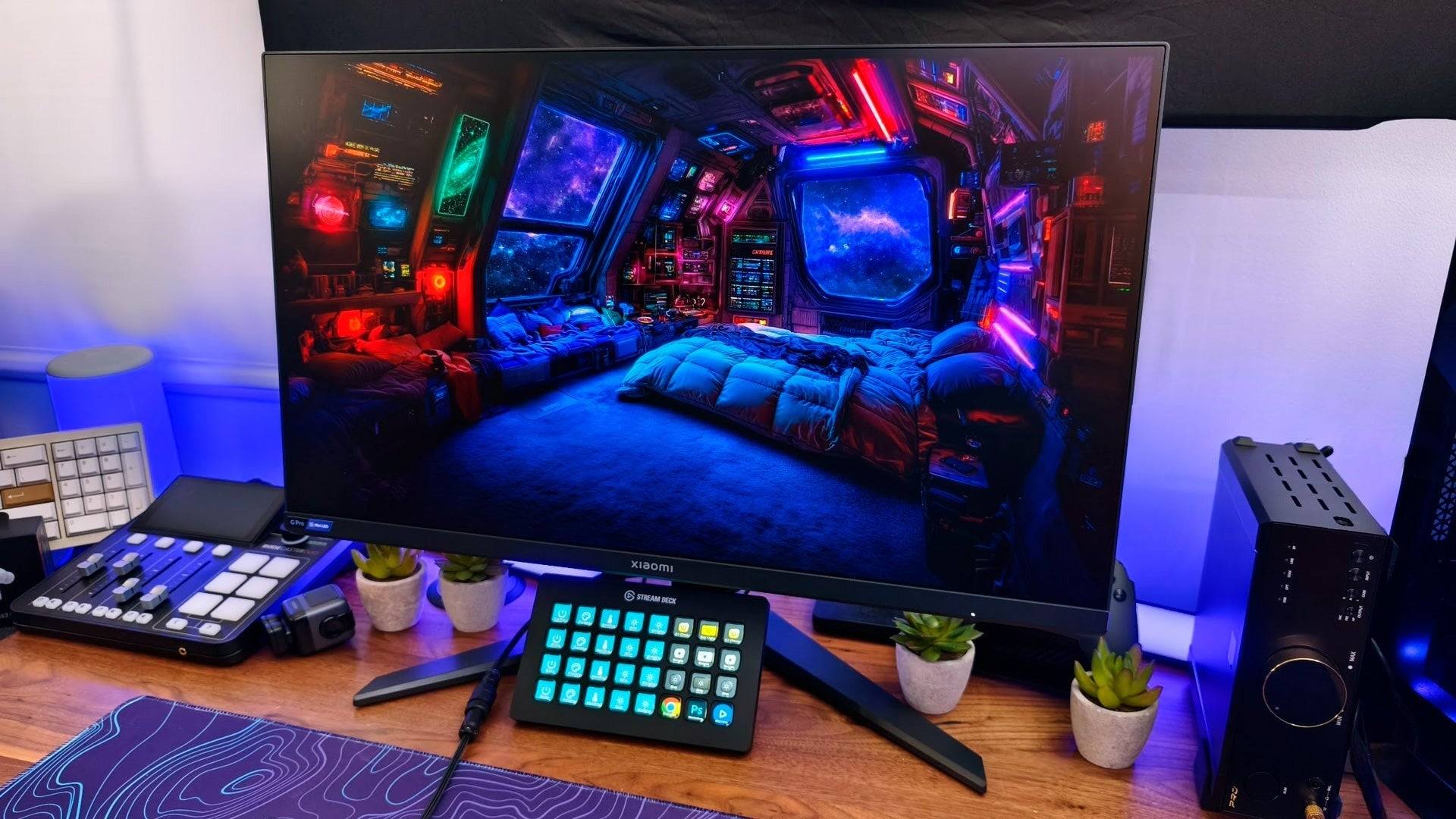
1 Incredible picture quality at an awesome price.
Product Specifications
PROS: High brightness and deep contrast; Great color accuracy; Outstanding picture quality and HDR; Robust 1,152 local dimming zones
CONS: Bloom on dark grey backgrounds; No USB hub
The Xiaomi G Pro 27i is surprisingly impressive. Its mini-LED backlight with full-array local dimming (FALD) and 1,152 local dimming zones (usually found in $700+ monitors) minimizes blooming, resulting in fantastic HDR. Its picture quality rivals OLEDs at a fraction of the cost, without burn-in risks. It boasts 180Hz refresh rate, low motion blur, and accurate colors across various color modes. It's compatible with AMD FreeSync and Nvidia G-Sync. While lacking a USB hub and only supporting HDMI 2.0, these trade-offs are worthwhile given its price and performance.
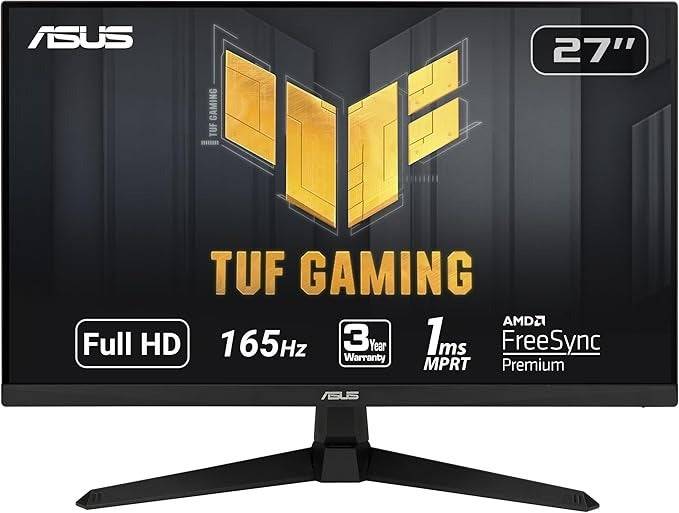
2 Great gaming performance at around $150.
Product Specifications
PROS: Great colors and impressive contrast; ELMB support for improved motion clarity; VESA support for third-party stands
CONS: Slightly lower pixel density; No height adjustment
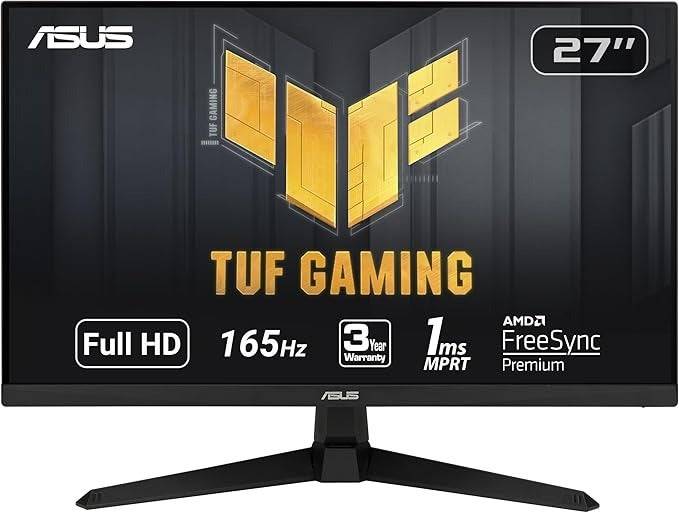
The Asus TUF Gaming VG277Q1A offers exceptional value. Its VA panel delivers deep blacks and wide dynamic range, easily driven by various hardware. Its 1ms response time and features like on-screen reticles, Shadow Boost, and ELMB enhance gameplay. The non-adjustable stand and lower pixel density due to 1080p resolution are minor drawbacks, easily offset by its strengths.
00 144Hz 1440p with adaptive sync and color accuracy.
Product Specifications
PROS: Solid HDR gaming; Great color accuracy
CONS: Stand isn’t height adjustable
The LG UltraGear 27GN800-B provides a resolution upgrade to 1440p, enhancing sharpness. Its accurate colors and 144Hz refresh rate with AMD FreeSync and Nvidia G-Sync support ensure smooth, tear-free HDR gaming. Low Framerate Compensation further improves smoothness. The non-adjustable stand is its main drawback, but VESA mounting allows for upgrades.
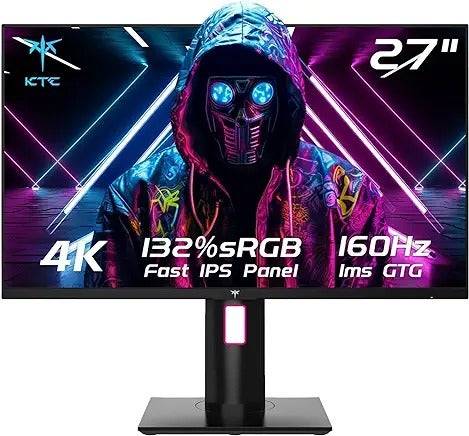
1 Fast and fantastic 4K picture on a budget.
Product Specifications
PROS: Sharp 4K screen; Great for consoles thanks to HDMI 2.1 connectivity; Fast refresh rate; Excellent value overall
CONS: No USB connectivity; Not factory calibrated
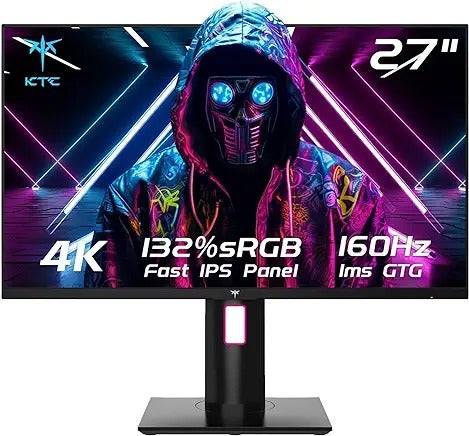
The KTC H27P22D demonstrates advancements in budget 4K gaming. Its 160Hz refresh rate, AMD FreeSync Premium support, and dual HDMI 2.1 ports make it ideal for consoles. While its brightness isn't ideal for true HDR, it delivers a vivid SDR experience. Its color coverage is good, though factory calibration is absent. The lack of a USB hub is a minor issue considering its overall value.
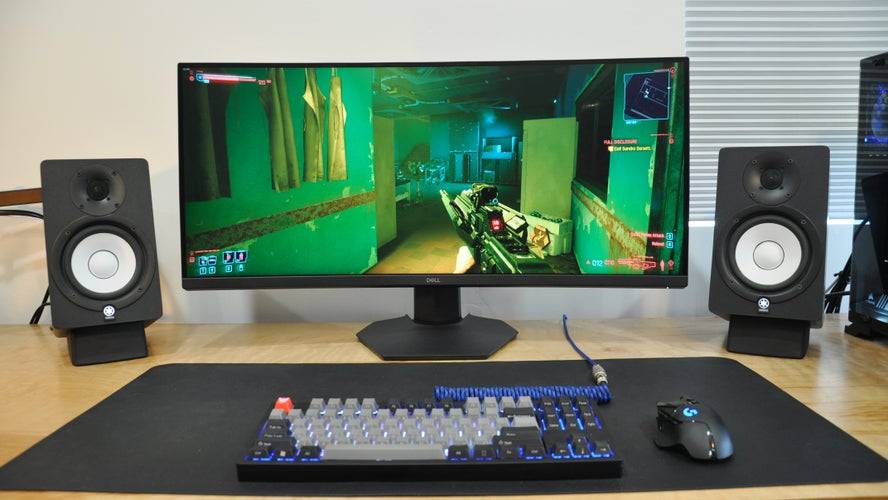

00 Immersive ultrawide with 1440p/144Hz.
Product Specifications
PROS: Great contrast; Immersive wide, curved display
CONS: Minor ghosting
The Dell S3422DWG offers an immersive gaming experience with its curved ultrawide display. Its 3440x1440 resolution and 144Hz refresh rate with AMD FreeSync support provide smooth gameplay. Minor ghosting is present, but overall motion clarity is strong. Its height-adjustable stand, multiple ports, and USB hub functionality add further value.
The $200-$300 range is a good sweet spot for budget gaming monitors. Cheaper options may compromise quality. A monitor should last 3-5 years, and a $100 monitor might not. Knowing what features matter most helps you make the right compromises.
Factors to Consider: Resolution, Refresh Rate, Panel Types, Screen Size
Gamers on a budget need to compromise. Prioritize either higher resolution or higher refresh rate. 1080p is standard in budget displays, offering high frame rates with less demanding hardware. 1440p is a better value if your budget allows, offering higher pixel density on a 27" screen than a 48" 4K TV. 4K is possible on a budget (around $400), but may require compromises in brightness or screen size, and demands higher system requirements.
Refresh rates generally range from 60Hz to 240Hz, with 144Hz being a good all-around choice and 240Hz an upgrade for competitive gamers. Note that maximum refresh rates may not be supported by all inputs; DisplayPort is best for high refresh rates.
Panel type is crucial. IPS offers motion clarity, vibrance, and responsiveness, ideal for competitive gaming. VA provides better contrast and dark scene performance, better for graphically intense games. Our top pick uses an IPS panel with a mini-LED backlight, surpassing both.
Screen size is less limiting than before. 27" is a good size, with smaller (24") monitors being cheaper and preferred by competitive gamers, and larger ones (32" and up) offering more immersion (but potentially losing detail without higher resolution). A 27" 16:9 monitor is a safe bet.
Nvidia G-Sync or AMD FreeSync support is recommended, depending on your graphics card. Many budget monitors support both.
HDR is often marketed, but is unimpressive on most budget monitors due to limited brightness (400 nits).
Budget monitors usually have VA or IPS panels. Our top pick, with its mini-LED backlight, surpasses both. Otherwise, choose based on response time, color, and contrast. IPS excels in response time and color accuracy, while VA offers superior contrast. The "best" depends on your priorities.
Prime Day, Black Friday, Back to School sales, and new releases often bring deals.
Consider your space, resolution, and pixel density. 24" is good for 1080p, 27-32" for 1440p, and 27" or larger for 4K. Avoid 1080p monitors larger than 27" to prevent the screen door effect.
Girls Frontline 2: Exilium Global Website Goes Live, Along With Its Socials!
Marvel Rivals: Understanding Bussing and Catching It
New Game Plus in Assassin's Creed Shadows: Confirmed?
Top Skills to Prioritize for Yasuke in Assassin’s Creed Shadows
Assassin’s Creed Shadows Movements Reviewed by Two Parkour Athletes
Death Stranding 2 Release Date Unveiled in Massive Trailer
Pokemon GO Leak Teases New Adventure Effects
Amazon Music Unlimited: Free 3-Month Trial Available

Endless Grades: Pixel Saga – The Best Tips & Tricks To Boost Your Progression
Apr 22,2026
Foretales: Card Game Shapes Apocalyptic Fate
Apr 20,2026

Once Human: Best Builds for PvE and PvP
Apr 17,2026

Galaxy Defense Fortress TD: Dominate with Strategy
Apr 16,2026
Bandai Namco Remasters Another Tales Game, Likely Xillia
Apr 14,2026
 Category