by Nicholas Mar 18,2025
The Nvidia GeForce RTX 5090's release was underwhelming, offering a meager generational leap over the RTX 4090 at a significantly higher price. However, the RTX 5070 Ti presents a more compelling proposition. While not drastically faster than its predecessor, its affordability makes it the most sensible Blackwell-architecture card for most buyers, especially those on a budget.
Priced at $749, the GeForce RTX 5070 Ti excels as a 4K graphics card, effectively overshadowing the more expensive RTX 5080. It's crucial to note, however, that my review unit—an MSI aftermarket model—cost $1,099, exceeding the RTX 5080's $999 price point (assuming both are available at MSRP). At its base price of $749, though, the RTX 5070 Ti is arguably the best graphics card for the majority of gamers, particularly those aiming for a 4K gaming experience.
The Nvidia GeForce RTX 5070 Ti launched February 20, 2025, with a starting price of $749. Remember, this is the base price; expect various versions at higher costs. While excellent value at $749, its desirability diminishes as the price approaches that of the RTX 5080.
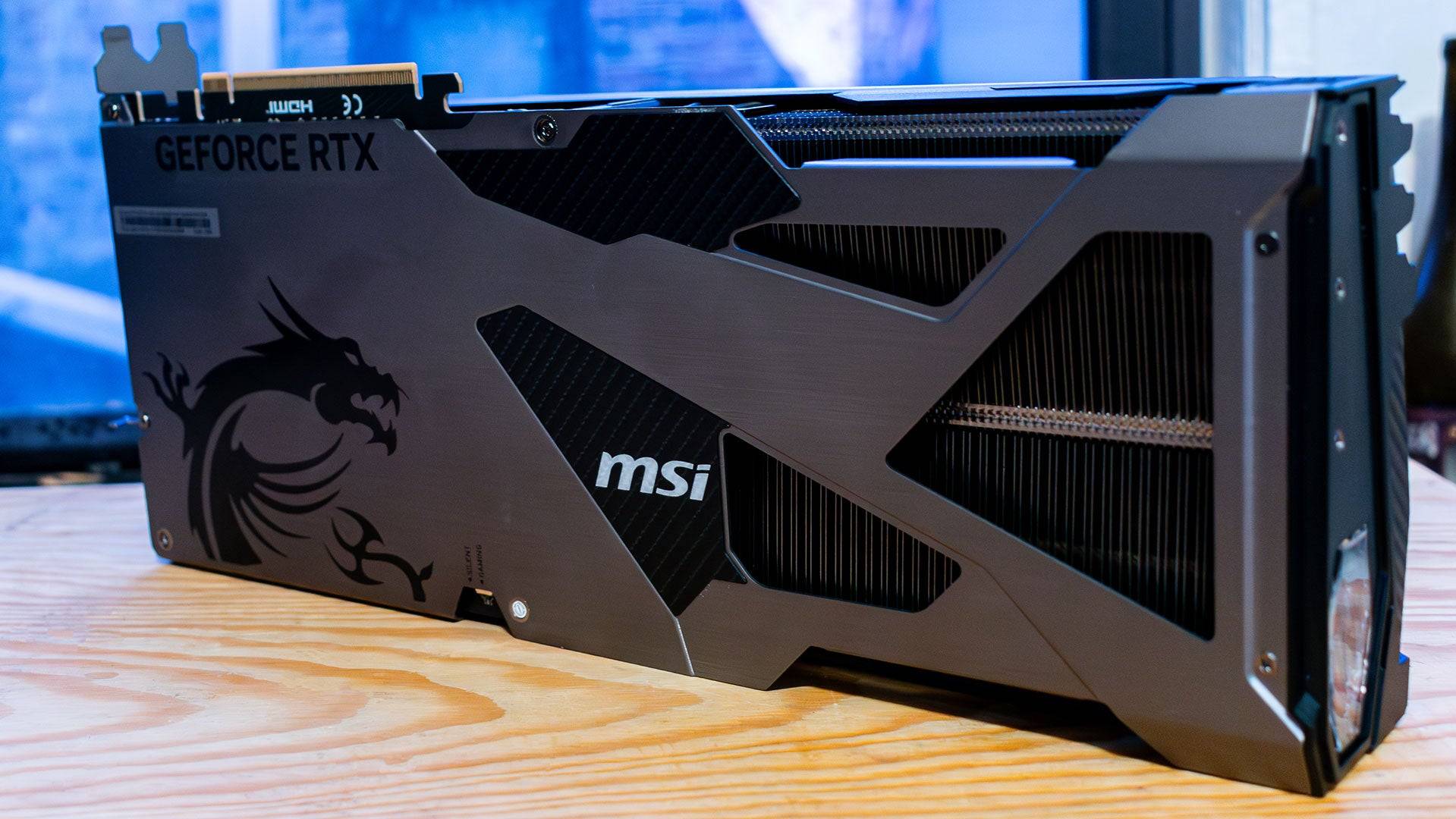
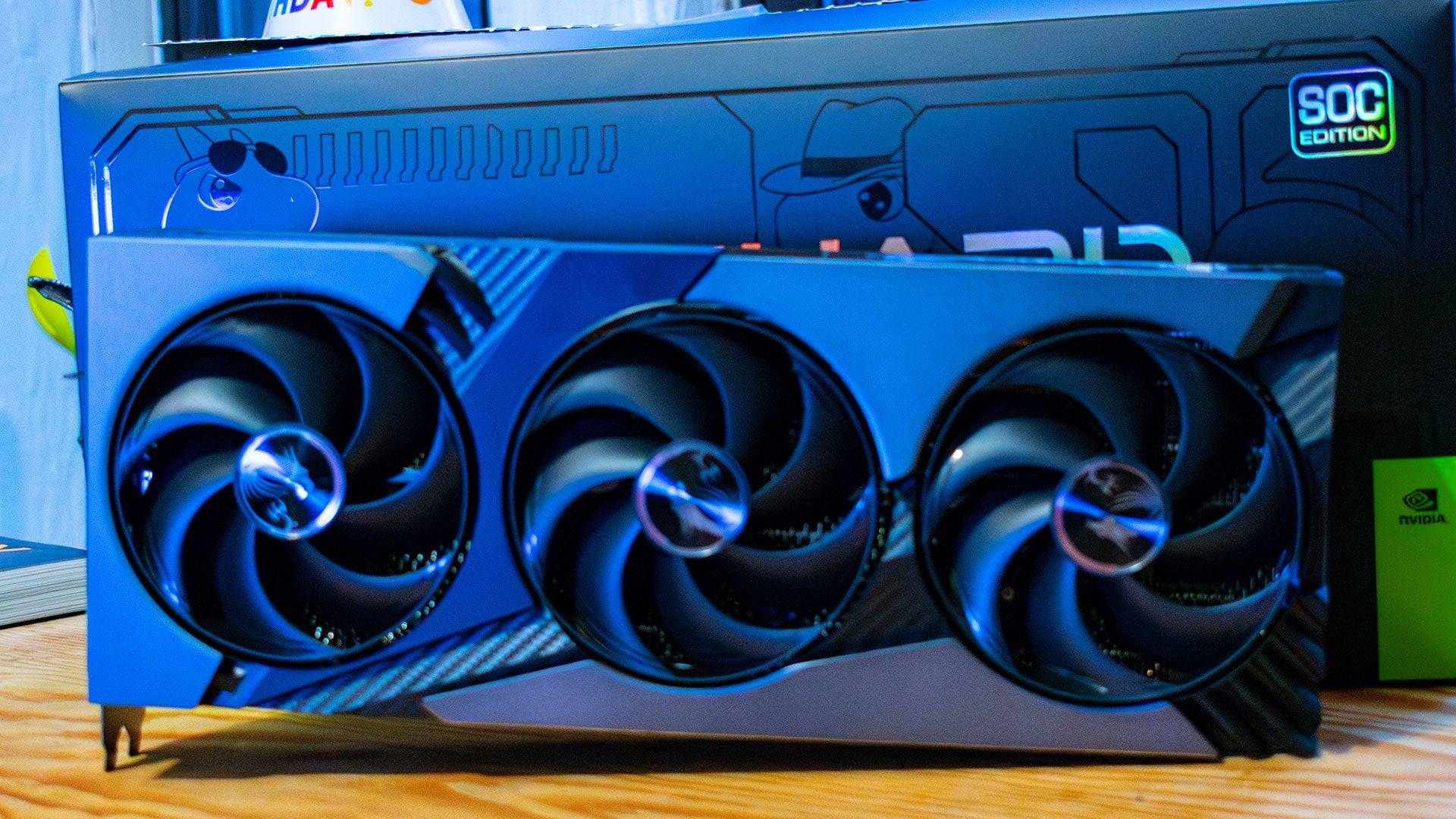
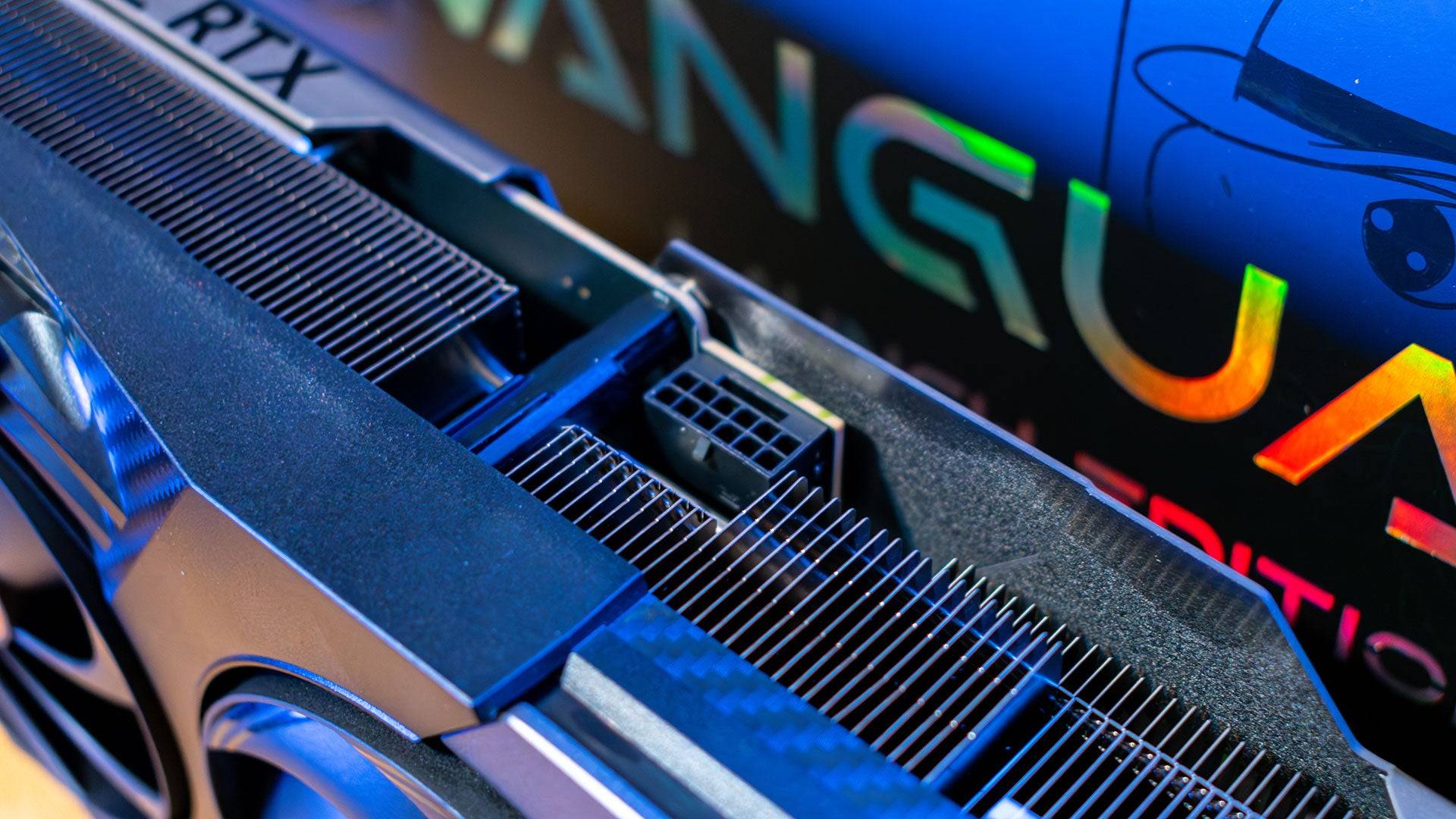
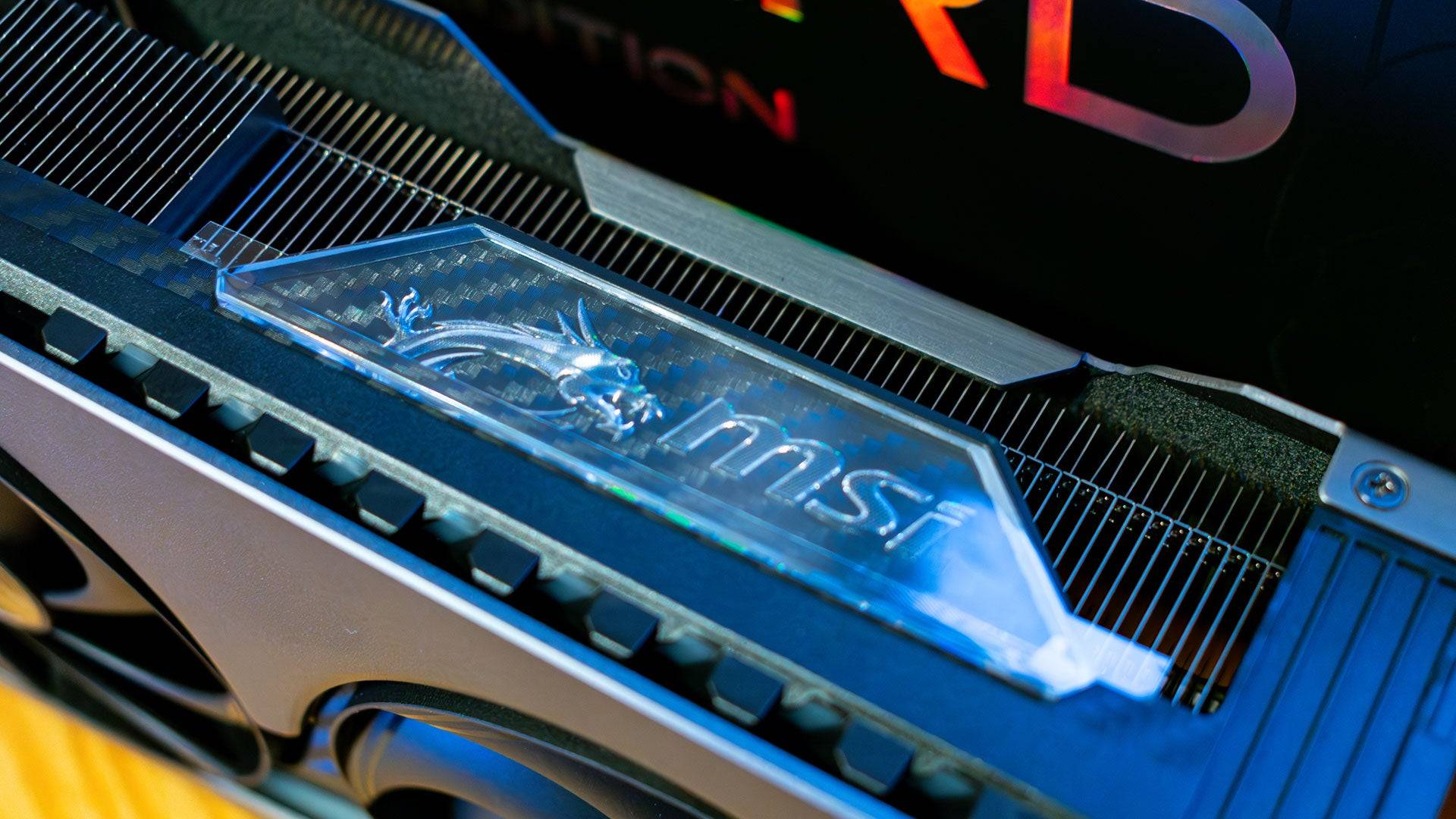
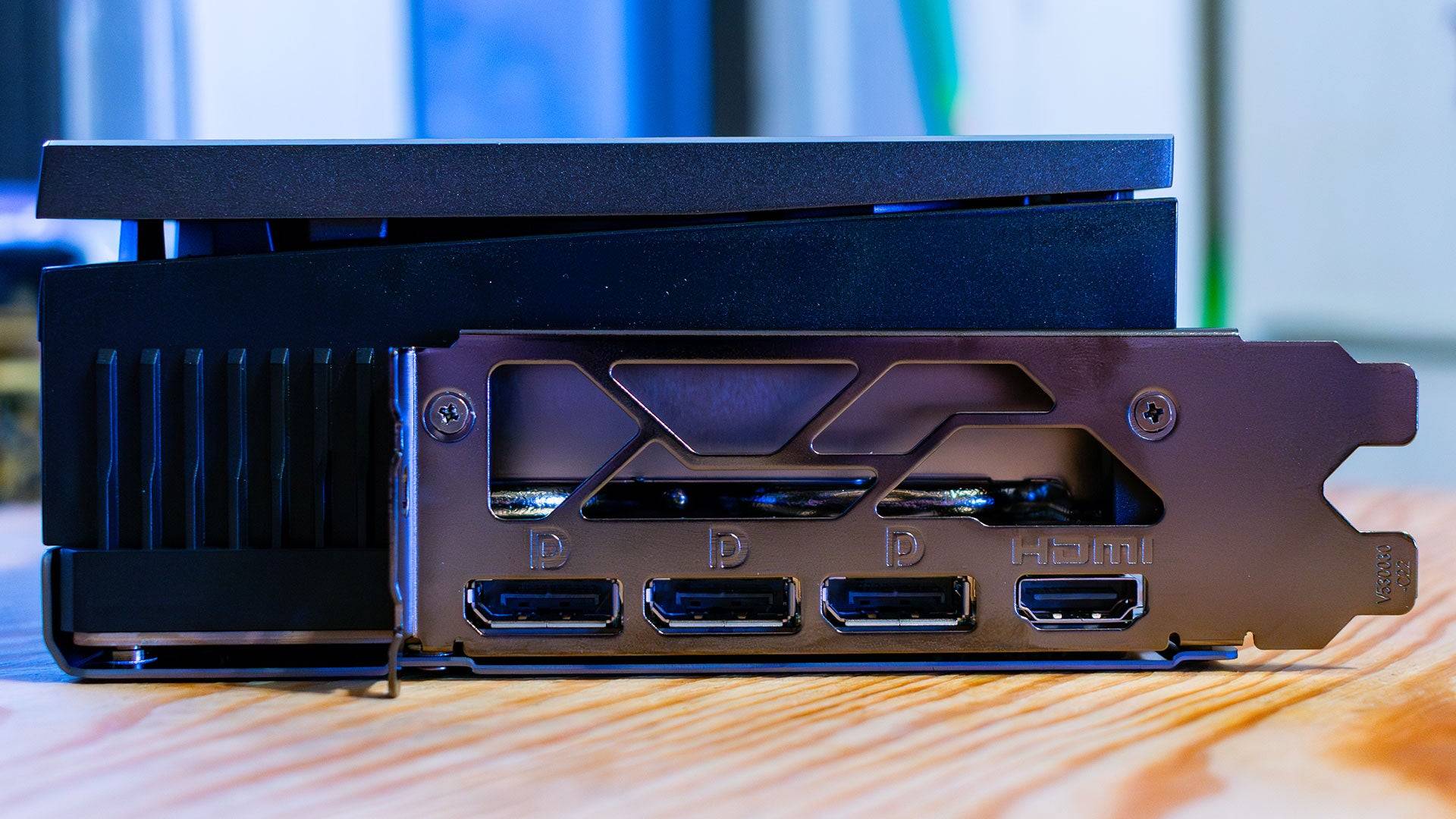

The Nvidia GeForce RTX 5070 Ti is the third graphics card utilizing Nvidia's Blackwell architecture. Initially designed for AI supercomputers powering models like ChatGPT, Nvidia has adapted it for gaming GPUs, retaining a strong AI focus. Based on the GB203 GPU (like the RTX 5080), it features 70 Streaming Multiprocessors (SMs) – 14 fewer than the 5080 – resulting in 8,960 CUDA cores, 70 RT cores, and 280 Tensor Cores. It also boasts 16GB of GDDR7 RAM, albeit slightly slower than the RTX 5080's.
The Tensor Cores are key. While the RTX 5070 Ti's CUDA cores outperform the RTX 4070 Ti's, Nvidia relies heavily on AI upscaling and frame generation to maximize performance. Blackwell introduces an AI Management Processor (AMP), offloading tasks previously handled by the CPU, significantly boosting the efficiency of DLSS and frame generation.
This efficiency has revolutionized DLSS, now employing a Transformer model instead of a Convolutional Neural Network (CNN). This doesn't necessarily increase speed, but dramatically improves image quality, mitigating ghosting and artifacts. DLSS 4 also features "Multi-Frame Generation" (MFG), generating up to three frames per rendered frame (compared to one in previous generations), theoretically quadrupling frame rates. Higher latency is a trade-off, potentially offset by Nvidia's Reflex technology.
With a 300W Total Board Power (TBP), the RTX 5070 Ti's power consumption is comparable to the RTX 4070 Ti and 4070 Ti Super (both 285W). Nvidia recommends a 750W PSU, but 850W is advisable, especially with high-end models like the MSI Vanguard Edition.
While faster than its predecessor, the RTX 5070 Ti's main selling point is DLSS 4, particularly MFG. For high-refresh-rate monitors, it maximizes display potential, but don't expect dramatic latency improvements. MFG analyzes rendered frames and game engine motion data to predict subsequent frames, generating them via AI. This isn't new (RTX 4090 used similar tech), but the scale is different: MFG generates up to three frames per rendered frame, potentially increasing frame rates up to 4x. In practice, it's rarely a perfect 4x improvement.
In *Cyberpunk 2077* (Ray Tracing Overdrive, DLSS Performance), I achieved 46 fps (43ms latency) without frame generation, 88 fps (49ms latency) with 2x, and 157 fps (55ms latency) with 4x (a 3.4x increase, but with higher latency). *Star Wars Outlaws* showed a different pattern: 67 fps (47ms) without frame generation, 111 fps (34ms) with 2x (latency decreased thanks to Reflex), and 188 fps (37ms) with 4x. While MFG creates smoother gameplay on high-refresh displays, responsiveness isn't significantly enhanced. Latency increases are minimal with high frame rates, as the algorithm has more data to work with.
Low frame rates (e.g., 30 fps) can lead to noticeable lag and artifacts due to inaccurate image prediction. This isn't a concern with the RTX 5070 Ti, even at 4K.
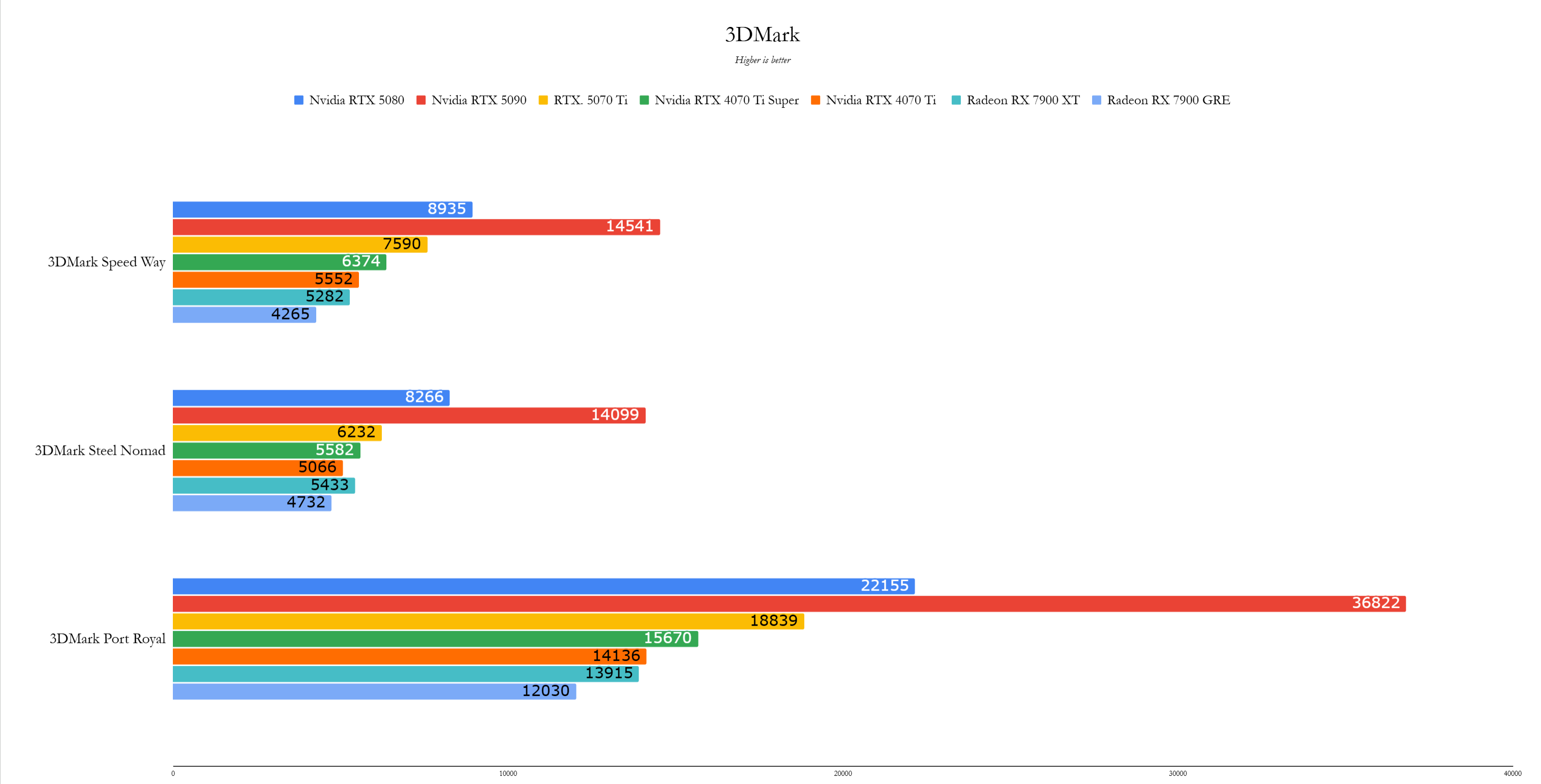
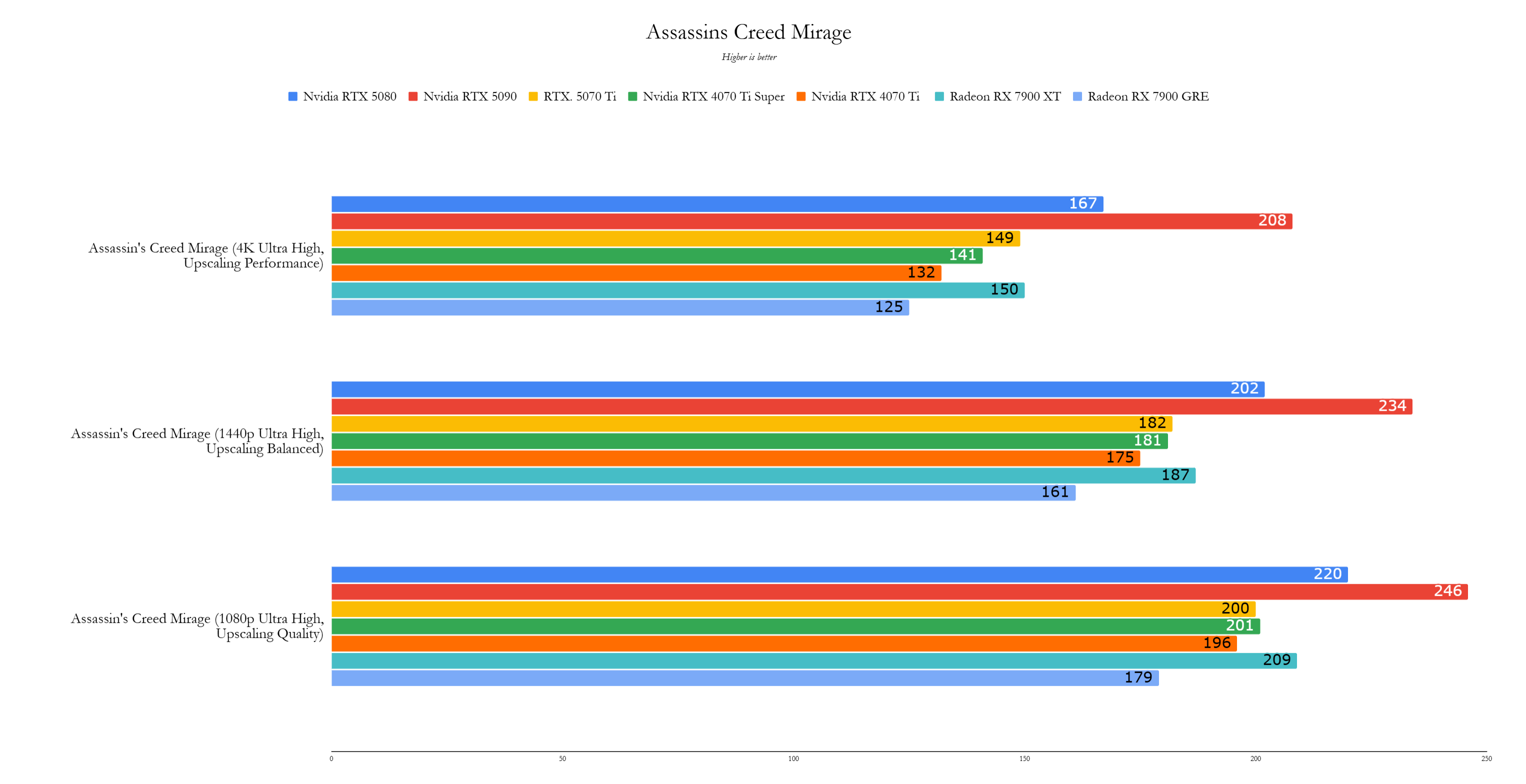
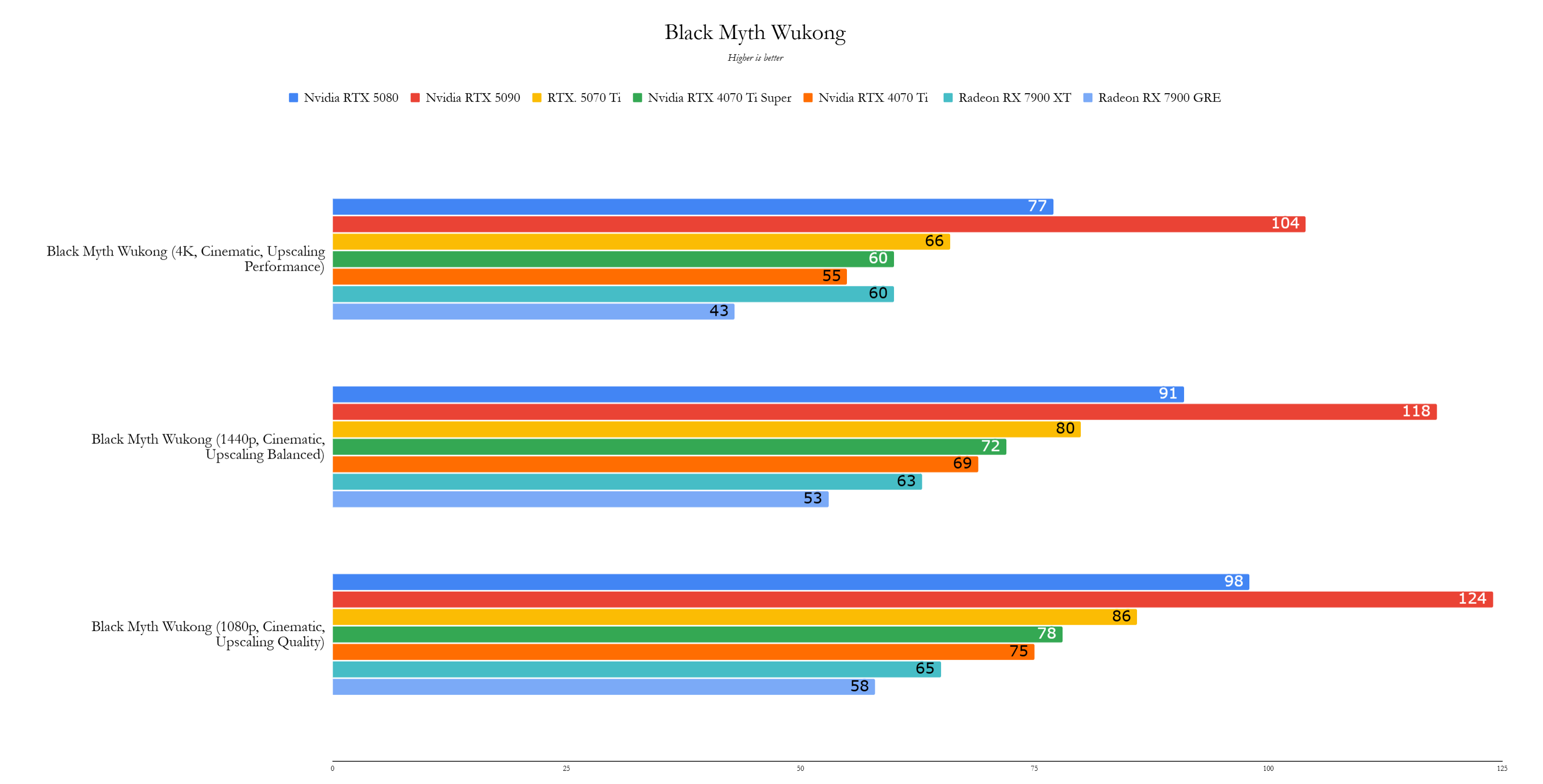
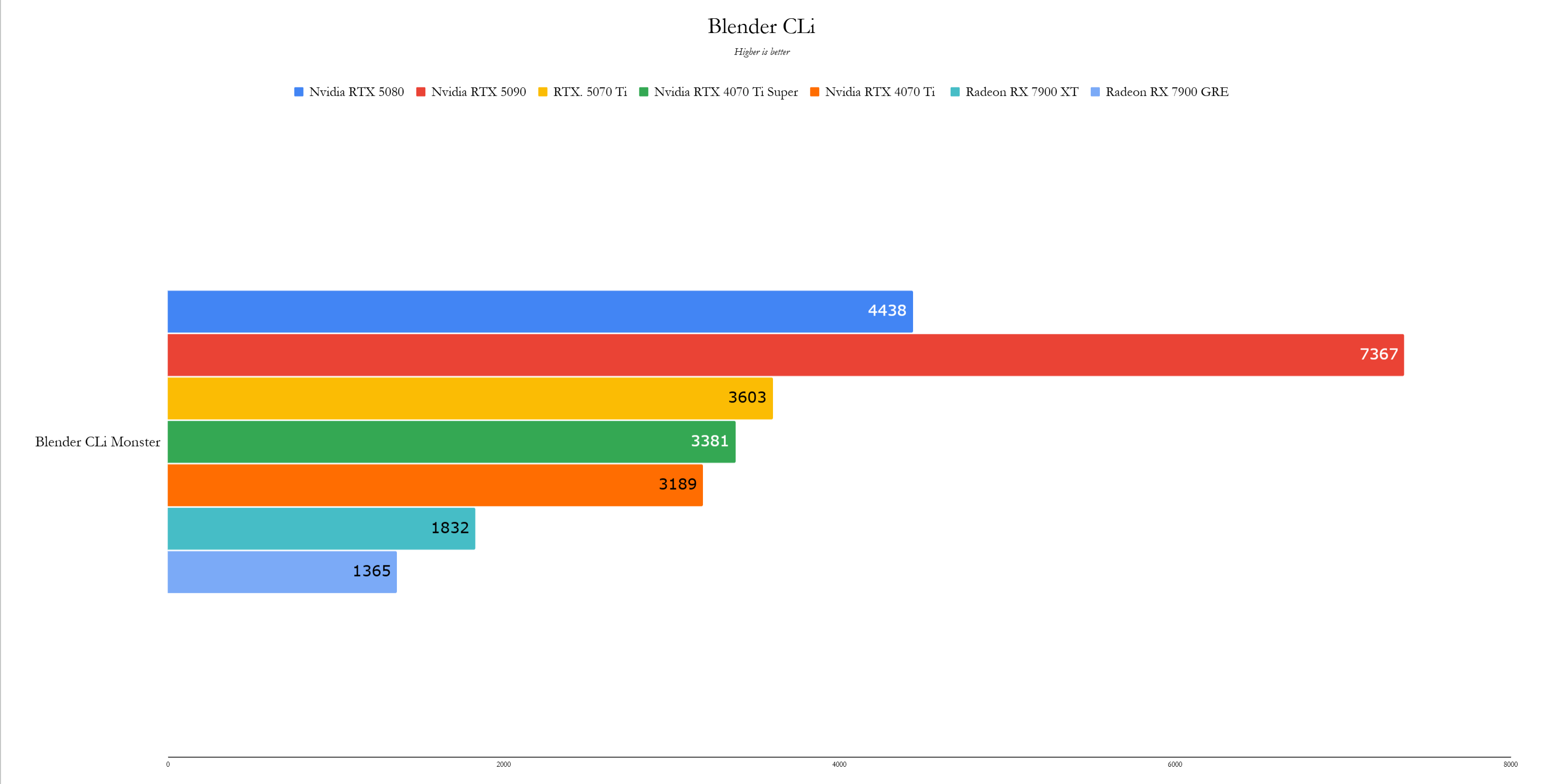
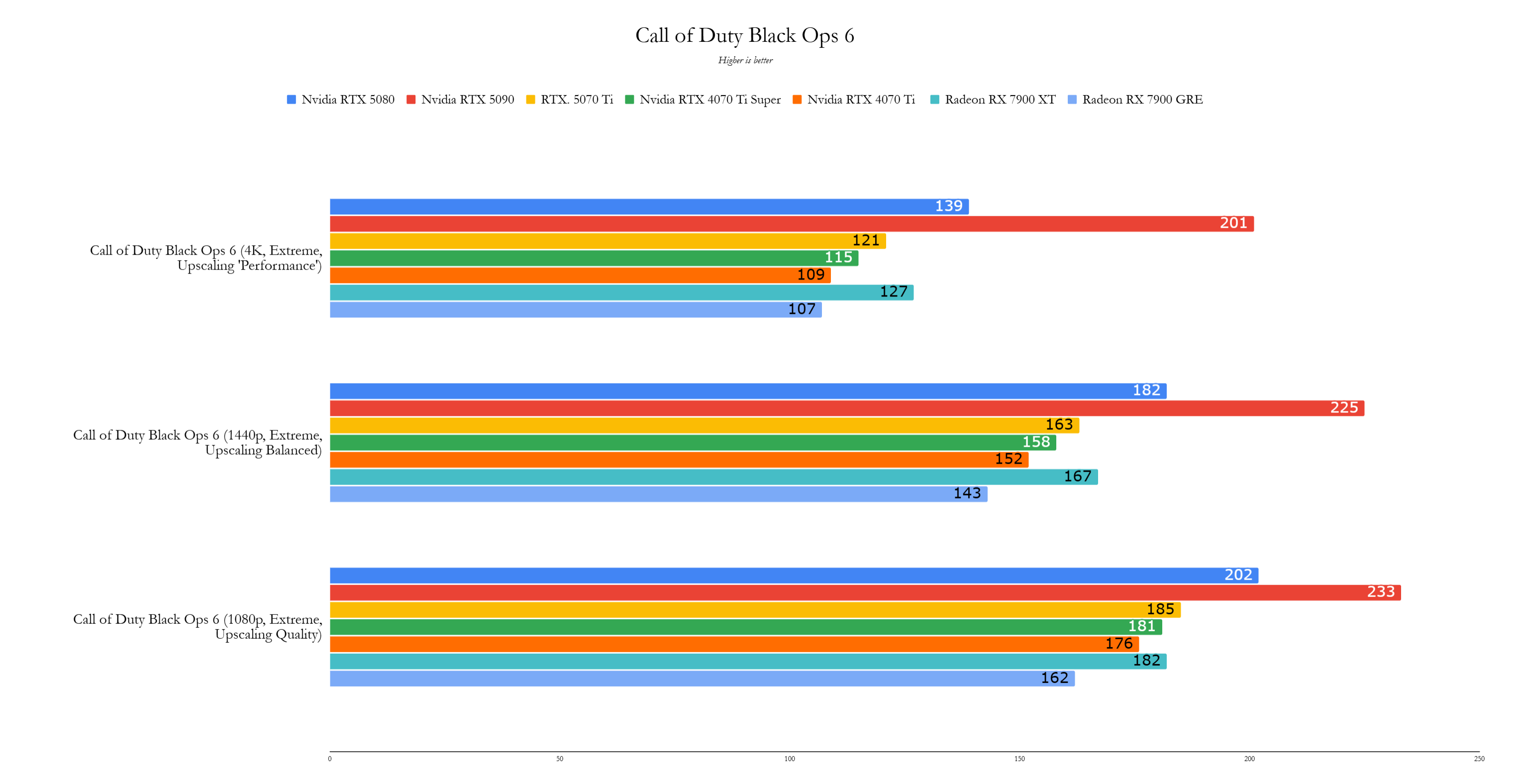
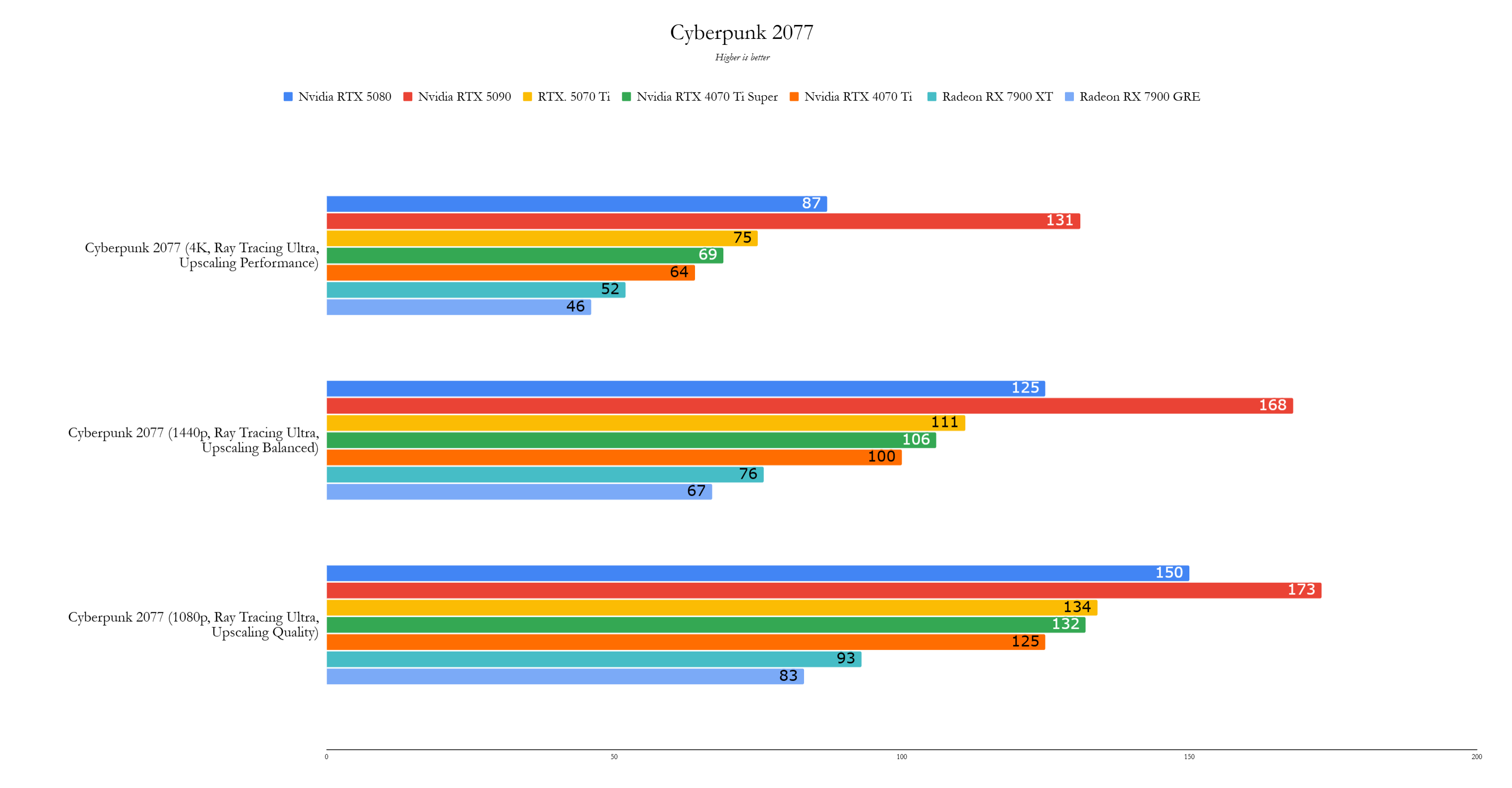
At 4K, the RTX 5070 Ti is approximately 11% faster than the RTX 4070 Ti Super and 21% faster than the RTX 4070 Ti—a better generational improvement than the RTX 5080, making it the best value card in this generation. It consistently exceeded 60 fps at 4K in demanding games like *Black Myth: Wukong* and *Cyberpunk 2077*. My testing used the MSI Vanguard Edition at stock settings (no overclocking) to represent the base GPU's performance. All games were tested with the latest drivers (Nvidia cards except the 5070 Ti on Game Ready Driver 572.42, AMD cards on Adrenalin 24.12.1, and the 5070 Ti on a pre-release driver). Frame generation and upscaling (DLSS/FSR) were used where applicable.
Test System: CPU: AMD Ryzen 7 9800X3D; Motherboard: Asus ROG Crosshair X870E Hero; RAM: 32GB G.Skill Trident Z5 Neo @ 6,000MHz; SSD: 4TB Samsung 990 Pro; CPU Cooler: Asus ROG Ryujin III 360.
In 3DMark Speed Way, the RTX 5070 Ti scored 7,590 (vs. RTX 4070 Ti Super's 6,374 and RTX 4070 Ti's 5,552), a 19% and 36% improvement, respectively. Port Royal scores were 18,839 (vs. 15,670 and 14,136), showcasing its potential. Game performance showed smaller differences; *Call of Duty: Black Ops 6* (4K Extreme) saw a 5% improvement (121 fps vs. 115 fps), while *Cyberpunk 2077* showed a 9% and 17% lead over the 4070 Ti Super and 4070 Ti, respectively. *Metro Exodus: Enhanced Edition* (4K Extreme, no upscaling) yielded 48 fps, a slight but notable lead over competitors. *Red Dead Redemption 2* was an outlier, with the 5070 Ti 2% slower than the 4070 Ti Super. *Total War: Warhammer 3* (4K max, no ray tracing/upscaling) showed a 15% and 30% lead over the 4070 Ti Super and 4070 Ti, respectively. *Assassin's Creed Mirage* (4K Ultra High) showed 149 fps, slightly behind the Radeon RX 7900 XT. *Black Myth: Wukong* (4K Cinematic, DLSS 40%) achieved 66 fps, a 10% improvement and a lead over the RX 7900 XT. *Forza Horizon 5* (4K Extreme) showed a 15% and 21% lead over the 4070 Ti Super and 4070 Ti, respectively, and a 10% lead over the RX 7900 XT.
Even mid-range cards are becoming capable 4K GPUs. At its $749 MSRP, the Nvidia GeForce RTX 5070 Ti offers exceptional value, especially with a 4K display. It's the first RTX 5000 series card to offer a significant upgrade over its predecessor at a lower price than the RTX 4070 Ti.
Girls Frontline 2: Exilium Global Website Goes Live, Along With Its Socials!
Marvel Rivals: Understanding Bussing and Catching It
New Game Plus in Assassin's Creed Shadows: Confirmed?
Top Skills to Prioritize for Yasuke in Assassin’s Creed Shadows
Assassin’s Creed Shadows Movements Reviewed by Two Parkour Athletes
Death Stranding 2 Release Date Unveiled in Massive Trailer
Pokemon GO Leak Teases New Adventure Effects
Amazon Music Unlimited: Free 3-Month Trial Available

Ahsoka Revealed at Star Wars Celebration
Apr 09,2026
Netflix and PBS to Stream New Sesame Street Episodes After HBO Max Deal Ends
Apr 07,2026
Eternity's Bastion Season 2 Debuts Post-EVA 2025 Triumph
Apr 02,2026

Alien RPG: Idle Space Farm Guide
Apr 02,2026
GOG unveils one-click mods, Skyblivion arrives this year
Mar 30,2026
 Category