by Aaliyah Jan 29,2025
Deadlock, Valve's MOBA-Shooter, verzeichnete einen signifikanten Spieler, wobei die Spitzenanlagen inzwischen rund 18.000 bis 20.000 liegen, weit entfernt von seinem anfänglichen Spitzenwert von mehr als 170.000. Als Reaktion darauf hat Valve eine strategische Veränderung seines Entwicklungsansatzes angekündigt.
Der zuvor zweiwöchentliche Aktualisierungsplan wird zugunsten eines flexibleren Systems verschrottet. Wichtige Updates werden nun nach Bedarf veröffentlicht, sodass Entwickler mehr Zeit haben, um gründliche Änderungen zu erzielen und Stabilität zu gewährleisten. Während die Zeitleiste für große Patches jetzt flüssig ist, versichern Entwickler den Spielern, dass Hotfixes weiterhin dringende Probleme angehen werden.
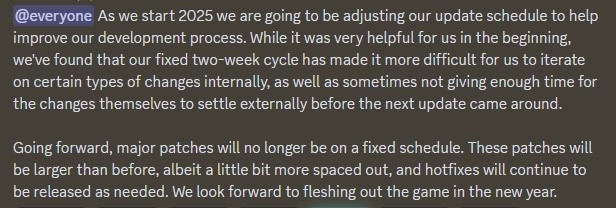 Bild: diskord.gg
Diese Änderung beruht auf der Erkenntnis, dass der vorherige zweiwöchige Zyklus nicht ausreichend Zeit für umfassende Tests und Implementierung zuließ. Die Entwickler glauben, dass diese überarbeitete Strategie letztendlich zu erheblicheren und polierten Aktualisierungen führen wird.
Trotz des Spielers der Spieler behauptet Valve, dass Deadlock nicht in Gefahr sei. Das Spiel ist immer noch im frühen Zugriff, ohne offizielles Erscheinungsdatum. Das langsamere Entwicklungs-Tempo wird wahrscheinlich auch von Valves Fokus auf andere Projekte beeinflusst, möglicherweise einschließlich des gemunkelten neuen Halbwertsspiels.
Der Ansatz vonValve priorisiert die Qualität vor Geschwindigkeit und ist der Ansicht, dass ein poliertes Produkt letztendlich organisch anziehen und die Spieler organisch behalten wird. Diese Strategie spiegelt die Entwicklung von Dota 2 wider, die im Laufe der Zeit auch zu einem weniger häufigen, umfangreicheren Aktualisierungsplan überging. Daher sollte die Änderung des Deadlock -Entwicklungszyklus nicht als negatives Vorzeichen interpretiert werden.
Girls Frontline 2: Exilium Global Website geht live, zusammen mit seinen sozialen Netzwerken!
Marvel -Rivalen: Das Verstehen von Bussen und Fangen
Neues Spiel Plus in Assassins Creed Shadows: bestätigt?
Top -Fähigkeiten, um Yasuke in Assassins Creed Shadows zu priorisieren
Assassins Creed Shadows -Bewegungen, die von zwei Parkour -Athleten überprüft wurden
Death Stranding 2 Erscheinungsdatum in massivem Trailer vorgestellt
Pokemon Go Leak neckt neue Abenteuereffekte
Amazon Music Unlimited: Kostenlose 3-Monats-Testversion verfügbar
As of recent reports, Disney has quietly removed 14 classic video games from its PC storefront, including popular titles like The Lion King (1994), Aladdin (1993), Pocahontas (1995), and Hercules (1997), among others. These games, originally released in the 1990s and early 2000s, were re-released on platforms like Steam and the Disney Digital Store as part of a nostalgic revival. What’s notable is that Disney provided no official explanation for the removals. There were no press releases, blog posts, or customer notifications. The games simply vanished from storefronts—disappearing from users’ libraries and purchase pages alike. Possible Reasons (Speculation): Licensing and Rights Issues: Some of these games may involve third-party licenses (e.g., music, character rights) that Disney no longer holds or has renewed. Rebranding or Re-releases: Disney may be preparing to re-launch these games under a new format—potentially remastered, updated, or re-released via a different platform or subscription service (like Disney+). Platform Strategy Shifts: Disney has been focusing on its own ecosystem (e.g., Disney+ Games, mobile apps), and removing older PC titles could be part of streamlining its digital offerings. Technical or Legal Obsolescence: Some of these titles may no longer be compatible with modern operating systems or could face unresolved legal challenges related to digital distribution. Fan Reaction: The removals have sparked strong reactions from fans and retro gaming communities. Many expressed disappointment, frustration, and confusion—especially since the games were still available for purchase and had active player bases. Some users noted that they had purchased the digital versions and now can’t access them. Others pointed out that these were not just games but cultural artifacts tied to iconic Disney films. What Should Players Do? Check your purchase history and digital library to see if you still have access to the games (some may still be in your Steam library or account). Contact Disney customer support for inquiries, though responses have been limited. Consider backing up any game files you have (if legally permitted). Stay tuned for any updates from Disney regarding a potential re-release. Final Note: While Disney has not confirmed the reason for the removals, the lack of communication has raised concerns about digital ownership and long-term access to video games. The incident highlights the fragility of digital media—even beloved classics can vanish without warning. For now, the 14 removed games remain missing from Disney’s storefronts, and fans are left hoping for a return—ideally with an explanation.
May 06,2026
Rezension: Alien Earth – Folge 4
May 04,2026
Nintendo Direct: Switch 2 vorgestellt
May 04,2026

Unison League kooperiert mit Hatsune Miku und führenden Vocaloid-Idolen
May 02,2026

Shelby American verbündet sich mit PUBG Mobile
May 02,2026
 Kategorie