by Ava May 02,2025
One of the most unforgettable moments in the entire Assassin’s Creed series unfolds near the beginning of Assassin’s Creed 3, when Haytham Kenway completes his mission to assemble his team in the New World. Initially, players are led to believe these are allies in the cause of the Assassins. Haytham wields a hidden blade, boasts the charisma of previous protagonist Ezio Auditore, and until this point, has portrayed himself as a hero by liberating Native Americans from captivity and confronting British redcoats. However, the revelation comes when he utters the iconic phrase, “May the Father of Understanding guide us,” making it clear that we've been following the Templars, the sworn enemies of the Assassins.
This twist is a testament to the series' potential fully realized. The original game introduced a compelling premise—track, understand, and assassinate your targets—but it lacked depth in its narrative, with both protagonist Altaïr and his targets lacking distinct personalities. Assassin’s Creed 2 improved with the more charismatic Ezio, yet it still fell short in developing its villains, such as Cesare Borgia in Assassin’s Creed: Brotherhood. It was not until Assassin’s Creed 3, set amidst the American Revolution, that Ubisoft truly invested in fleshing out both the hunters and the hunted. This effort created a seamless narrative flow from setup to payoff, achieving a balance between gameplay and storytelling that has yet to be matched in subsequent titles.
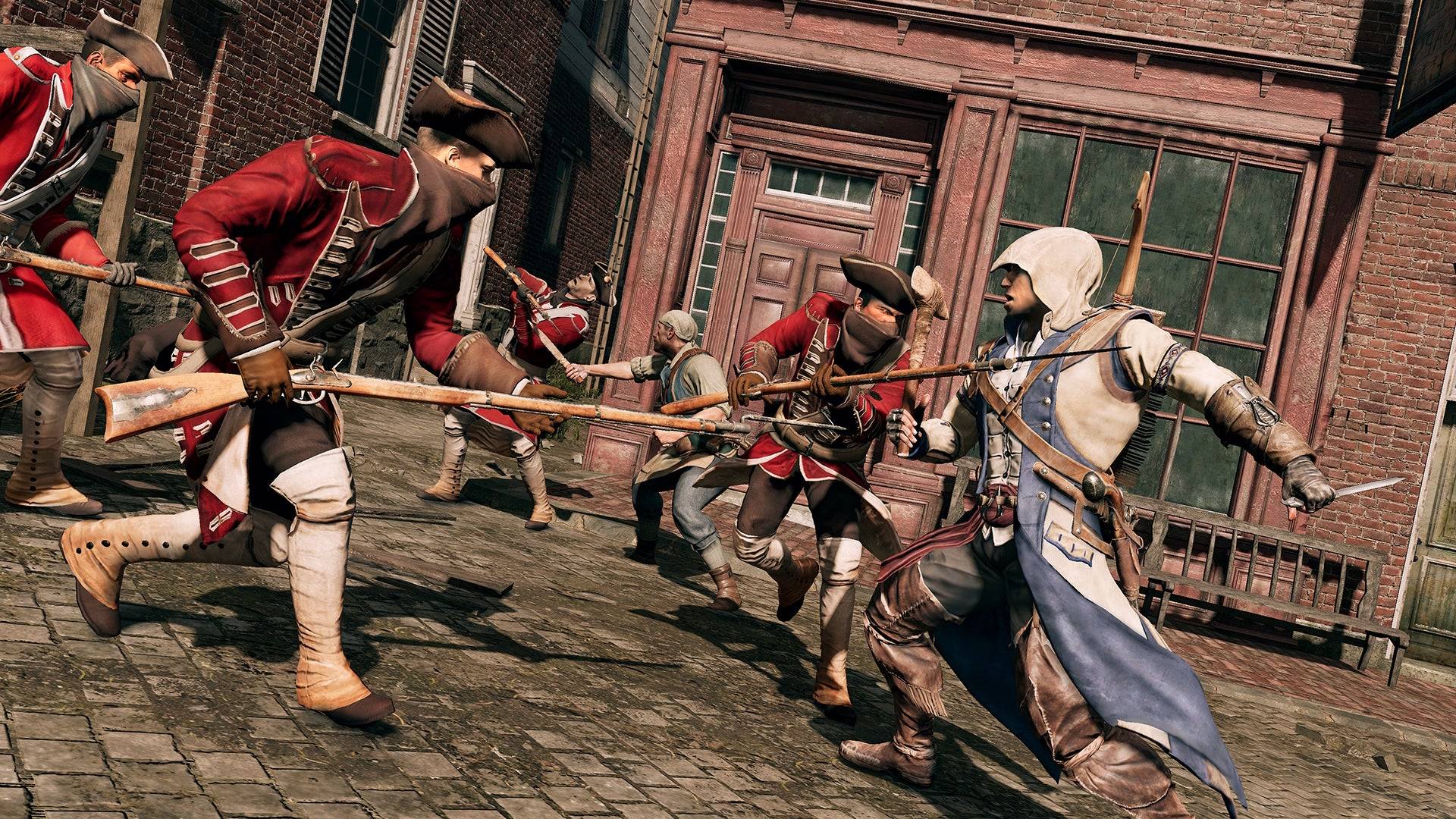 While the current RPG era of Assassin’s Creed has been generally well-received, there is a consensus among fans, critics, and online discussions that the series is experiencing a decline. The reasons for this are debated, with some attributing it to increasingly fantastical elements like battles against mythological figures such as Anubis and Fenrir. Others criticize the inclusion of diverse romance options or, in the case of Assassin’s Creed Shadows, the use of historical figures like the African samurai Yasuke as protagonists. However, I believe the true cause of this decline lies in the series' shift away from character-driven storytelling, which has become overshadowed by expansive sandbox elements.
Over time, Assassin’s Creed has expanded its original action-adventure formula with RPG and live service elements, including dialogue trees, XP-based leveling systems, loot boxes, microtransactions, and gear customization. Yet, as the games have grown larger, they've also begun to feel more hollow. This is evident not only in repetitive side missions but also in the storytelling itself. While a game like Assassin’s Creed Odyssey offers more content than Assassin’s Creed 2, much of it can feel scripted and underdeveloped. The addition of player choice in dialogue and actions should theoretically enhance immersion, but in practice, it often dilutes the narrative. The tightly scripted stories of the earlier action-adventure games allowed for well-defined characters, unlike the newer games where the protagonist's personality can shift based on player whims.
As a result, while Assassin’s Creed Odyssey technically contains more content than Assassin’s Creed 2, much of it feels less impactful and immersive. This is a stark contrast to the narrative richness of the Xbox 360/PS3 era, which I believe delivered some of the best writing in video games. Memorable moments include Ezio's passionate speech after defeating Savonarola, and Haytham Kenway's poignant soliloquy upon his death at the hands of his son, Connor:
“Don't think I have any intention of caressing your cheek and saying I was wrong. I will not weep and wonder what might have been. I'm sure you understand. Still, I'm proud of you in a way. You have shown great conviction. Strength. Courage. All noble qualities. I should have killed you long ago.”
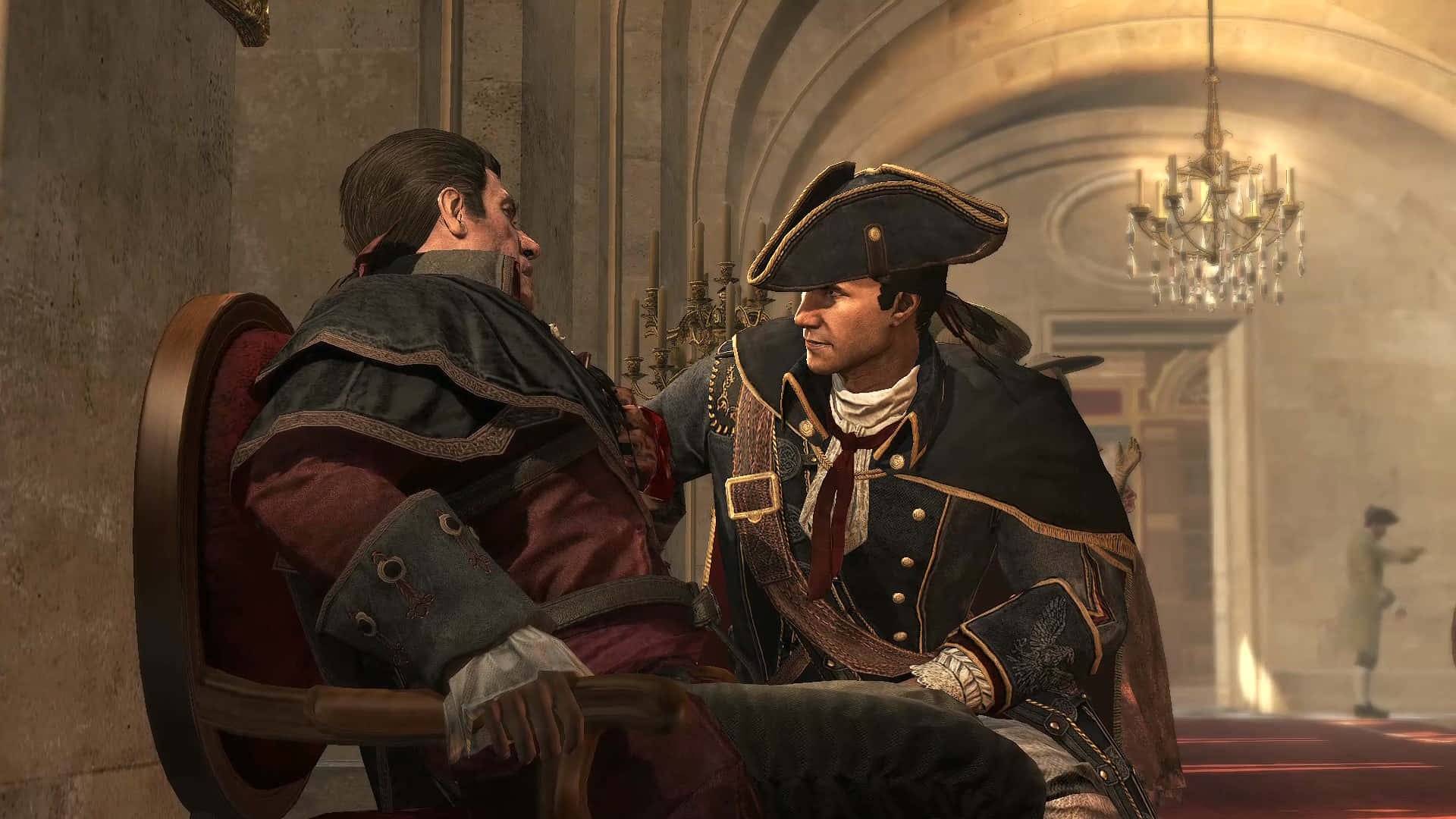 The narrative quality has also declined in other ways. Modern games tend to simplify the conflict to a clear-cut battle between good (Assassins) and evil (Templars), whereas earlier entries delved into the moral ambiguity between the two factions. In Assassin’s Creed 3, each Templar's final words challenge Connor's—and by extension, the player's—beliefs. William Johnson suggests the Templars could have prevented the Native American genocide, Thomas Hickey dismisses the Assassins' mission as unrealistic, and Benjamin Church argues that perspective defines the conflict, with the British viewing themselves as victims. Haytham even undermines Connor's trust in George Washington, foreshadowing the despotism of the new nation and revealing that Washington, not Charles Lee, ordered the burning of Connor's village. By the game's end, players are left with more questions than answers, making the story more compelling.
Reflecting on the series' history, it's clear why “Ezio’s Family” from the Assassin’s Creed 2 soundtrack became the franchise's theme. The PS3 games, especially Assassin’s Creed 2 and Assassin’s Creed 3, were fundamentally driven by character narratives. The melancholic guitar strings of “Ezio’s Family” resonated not just with the Renaissance setting but with Ezio's personal loss. While I appreciate the expansive worlds and advanced graphics of the current Assassin’s Creed games, I hope the series will return to its roots with more focused, character-driven stories. However, in today's market, dominated by vast sandboxes and games with live service ambitions, such a return might not align with "good business."
Girls Frontline 2: Exilium Global Website Goes Live, Along With Its Socials!
Marvel Rivals: Understanding Bussing and Catching It
New Game Plus in Assassin's Creed Shadows: Confirmed?
Top Skills to Prioritize for Yasuke in Assassin’s Creed Shadows
Assassin’s Creed Shadows Movements Reviewed by Two Parkour Athletes
Death Stranding 2 Release Date Unveiled in Massive Trailer
Pokemon GO Leak Teases New Adventure Effects
Amazon Music Unlimited: Free 3-Month Trial Available
Pokémon Players Now Think Another Card 'Looks Very Similar' to Fan Art, but Others Aren't Convinced This Is a Ho-Oh Plagiarism Situation
Mar 26,2026

Clown Alley Creator Launches, Craft Your Character
Mar 26,2026
Nintendo Today App Debuts as Fan Content Hub
Mar 24,2026
Death Stranding 2: On the Beach Reveals New Trailer
Mar 17,2026
Cyberpunk 2077 Update 2.3 Delayed to Expand Its Scope
Mar 16,2026
 Category