
by Skylar Apr 16,2025
As Cinderella's dream was set to end at midnight, so too was that of The Walt Disney Company in 1947, facing a daunting $4 million debt due to the financial struggles of films like Pinocchio, Fantasia, and Bambi, exacerbated by World War II and other factors. However, this beloved princess and her iconic glass slippers played a pivotal role in saving Disney from a premature end to its animation legacy.
As Cinderella celebrates its 75th anniversary of its wide release on March 4, we spoke with several Disney insiders who continue to draw inspiration from this timeless rags-to-riches tale. The story not only echoes Walt Disney's personal journey but also provided a beacon of hope for the company and a post-war world yearning for something to believe in.
The Right Film at the Right Time --------------------------------To understand the context, we must revisit Disney's own fairy godmother moment in 1937 with the release of Snow White and the Seven Dwarfs. The film's unprecedented success as the highest-grossing film of its time allowed Disney to establish its Burbank studio, the company's current headquarters, and paved the way for more feature-length animated films.
However, Disney's next film, 1940's Pinocchio, despite a budget of $2.6 million and critical acclaim, including Academy Awards for Best Original Score and Best Original Song, resulted in a $1 million loss. This trend continued with Fantasia and Bambi, which also underperformed due to the outbreak of World War II in 1939, which significantly impacted Disney's European markets.
“Disney's European markets dried up during the war and the films weren’t being shown there, so releases like Pinocchio and Bambi did not do well,” explained Eric Goldberg, co-director of Pocahontas and lead animator on Aladdin’s Genie. “The studio was then tasked by the U.S. government to produce training and propaganda films, shifting focus away from feature films. Throughout the 1940s, Disney released Package Films like Make Mine Music, Fun and Fancy Free, and Melody Time, which, while profitable, lacked the cohesive narrative of a feature-length story.”
 Package Films were compilations of short cartoons assembled into feature films. Between Bambi in 1942 and Cinderella in 1950, Disney produced six such films, including Saludos Amigos and The Three Caballeros, which supported the U.S.'s Good Neighbor Policy aimed at countering Nazi influence in South America. While these films helped reduce Disney's debt from $4.2 million to $3 million by 1947, they did not satisfy the studio's desire to return to feature animation.
“I wanted to get back into the feature field,” Walt Disney expressed in 1956, as quoted in The Animated Man: A Life of Walt Disney by Michael Barrier. “But it was a matter of investment and time. To produce a quality cartoon feature requires significant resources. My brother Roy and I had quite a heated discussion about it. It was a pivotal moment for us... We decided to either move forward or consider liquidating the company.”
Facing the possibility of selling his shares and leaving Disney, Walt, along with Roy, chose to take a risky step forward by focusing on their first major animated feature since Bambi. The success of this project was crucial to the survival of Disney's animation studio.
"I think the world needed the idea that we can come out from the ashes and have something beautiful happen."“At that time, Alice in Wonderland, Peter Pan, and Cinderella were all in development, but Cinderella was chosen first due to its similarities to Snow White. Beyond its potential as a commercial success, Walt believed this story could offer more than entertainment,” said Tori Cranner, Art Collections Manager at Walt Disney Animation Research Library. “Walt understood that America needed hope and joy post-war. While Pinocchio is a remarkable film, it lacks the joy that Cinderella brings. The world needed a reminder that beauty and hope can emerge from adversity, and Cinderella was the perfect story for that moment.”
Walt Disney's connection with Cinderella dates back to 1922 when he produced a Cinderella short at Laugh-O-Gram Studios, just before founding Disney with Roy. This short, and later the feature film, were inspired by Charles Perrault’s 1697 version of the tale, which has roots possibly as old as 7 BC to AD 23. The story of good versus evil, true love, and dreams coming true deeply resonated with Walt.
Although the early Laugh-O-Gram productions were not financially successful, leading to bankruptcy, they highlighted Walt's affinity for Cinderella's narrative of transformation and perseverance.
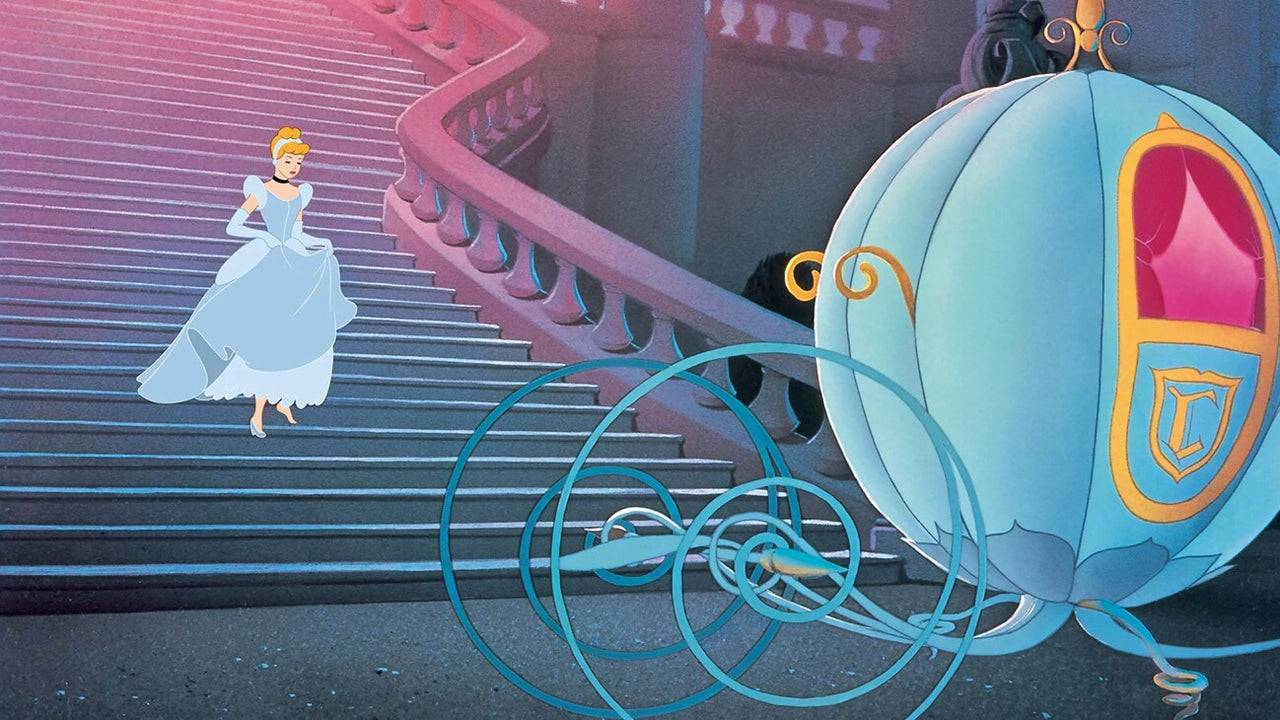 “Snow White was a kind and simple little girl who believed in wishing and waiting for her Prince Charming to come along,” Walt Disney remarked, as seen in Disney’s Cinderella: The Making of a Masterpiece special DVD feature. “Cinderella, on the other hand, was more practical. She believed in dreams but also in taking action. When Prince Charming didn’t come to her, she went to the palace and found him.”
Cinderella's resilience and determination, despite her mistreatment by her Evil Stepmother and Stepsisters, mirrored Walt's own journey from humble beginnings through numerous failures to eventual success driven by unwavering dreams and hard work.
This narrative remained significant to Walt, leading to a Silly Symphony short in 1933. However, the project's complexity grew, prompting a decision in 1938 to transform it into a feature film. It took over a decade to bring Cinderella to the screen, but this period allowed for its evolution into the beloved film known today.
Disney's success with Cinderella was partly due to its ability to adapt these timeless tales into universally appealing stories.
“Disney excelled at reimagining these classic fairytales, infusing them with his unique taste, entertainment sense, heart, and passion, making audiences care deeply about the characters and story,” Goldberg noted. “Traditional fairytales often served as cautionary tales with grim outcomes for villains. Disney transformed these into stories that were enjoyable and accessible to all, ensuring their enduring popularity.”
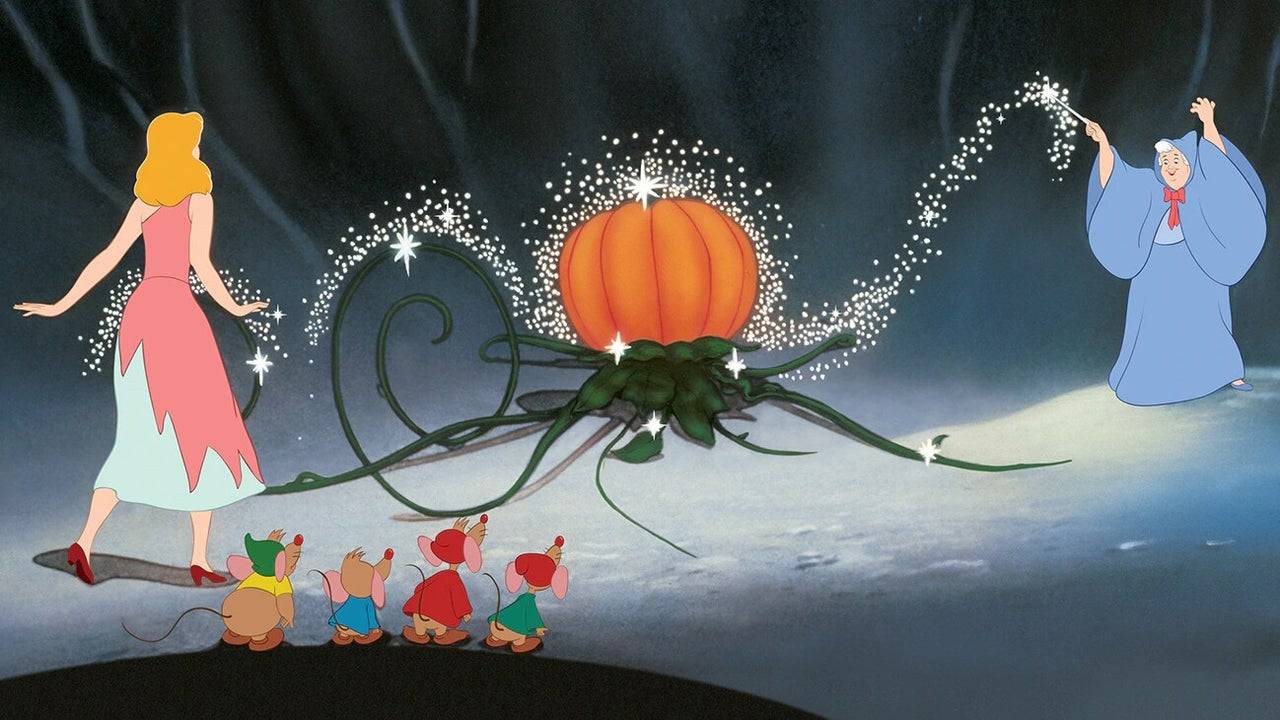
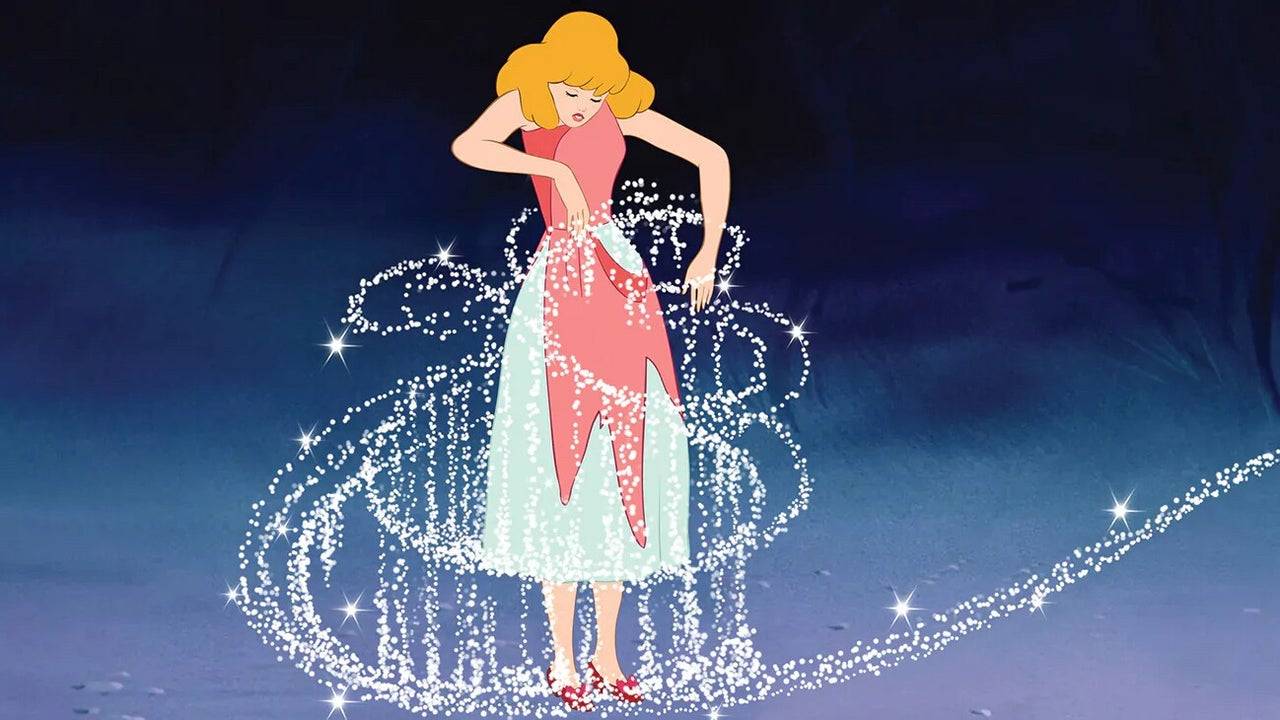
"She believed in dreams all right, but she also believed in doing something about them."Disney enhanced Cinderella's story with her animal friends—Jaq, Gus, and the birds—who provided comic relief and allowed audiences to connect with Cinderella on a deeper level. The Fairy Godmother, reimagined as a bumbling yet endearing character by animator Milt Kahl, added a relatable charm, culminating in one of the most iconic scenes in cinema—the transformation of Cinderella's dress.
The animation of this dress transformation, credited as Walt’s favorite, was meticulously crafted by Disney Legends Marc Davis and George Rowley, showcasing the magic of hand-drawn and hand-painted sparkles.
Thanks so much for all your questions about Cinderella! Before we sign off, enjoy this pencil test footage of original animation drawings of the transformation scene, animated by Marc Davis and George Rowley. Thanks for joining us! #AskDisneyAnimation pic.twitter.com/2LquCBHX6F
— Disney Animation (@DisneyAnimation) February 15, 2020
“Every single one of those sparkles was hand-drawn on every frame and then hand-painted, which is astonishing,” Cranner marveled. “There’s a perfect moment during the transformation where the magic holds for just a fraction of a second before everything falls into place, adding to the scene's enchantment. It's like holding your breath before the magic unfolds.”
Disney also added the dramatic element of the glass slipper breaking at the film's climax, emphasizing Cinderella's agency and strength.
“I think something that a lot of people overlook is that Cinderella is not a passive character,” Goldberg pointed out. “She has a strong personality and takes control of her destiny, as shown when she produces the other glass slipper. It's a powerful moment that underscores her resilience and resourcefulness.”
Cinderella premiered in Boston on February 15, 1950, and was widely released on March 4, becoming an immediate success. It earned $7 million on a $2.2 million budget, the best box office performance for Disney since Snow White, and received three Academy Award nominations.
“When Cinderella was released, critics hailed it as a triumphant return for Walt Disney to narrative features,” Goldberg said. “It was a massive success, rekindling the studio's passion for storytelling. Following Cinderella, Disney produced iconic films like Peter Pan, Lady and the Tramp, Sleeping Beauty, 101 Dalmatians, and The Jungle Book, all thanks to the foundation laid by Cinderella.”
Seventy-five years on, Cinderella's influence remains profound within Disney and beyond. Her castle stands as a symbol at Walt Disney World and Tokyo Disneyland, and her story continues to inspire modern Disney films.
“When we animated Elsa’s dress transformation in Frozen, we drew direct inspiration from Cinderella,” said Becky Bresee, lead animator on Frozen 2 and Wish. “The sparkles and effects around Elsa’s dress pay homage to Cinderella, connecting our work to the legacy of Disney's classics.”
 Cinderella's impact extends to the contributions of the Nine Old Men and Mary Blair, whose work brought distinctive life and style to the film. As we reflect on Cinderella's enduring legacy, Eric Goldberg's words resonate: “The big thing about Cinderella is hope. It gives people hope that perseverance and strength can lead to dreams coming true, no matter the era.”
Girls Frontline 2: Exilium Global Website Goes Live, Along With Its Socials!
Marvel Rivals: Understanding Bussing and Catching It
New Game Plus in Assassin's Creed Shadows: Confirmed?
Top Skills to Prioritize for Yasuke in Assassin’s Creed Shadows
Assassin’s Creed Shadows Movements Reviewed by Two Parkour Athletes
Death Stranding 2 Release Date Unveiled in Massive Trailer
Pokemon GO Leak Teases New Adventure Effects
Amazon Music Unlimited: Free 3-Month Trial Available
GOG unveils one-click mods, Skyblivion arrives this year
Mar 30,2026
The Darkside Detective Is This Week’s Free Mobile Game on the Epic Games Store
Mar 29,2026

Randy Pitchford Defends Borderlands 4 Comment in Statement
Mar 28,2026
Pokémon Players Now Think Another Card 'Looks Very Similar' to Fan Art, but Others Aren't Convinced This Is a Ho-Oh Plagiarism Situation
Mar 26,2026
Clown Alley Creator Launches, Craft Your Character
Mar 26,2026
 Category