
by Aria Apr 20,2025
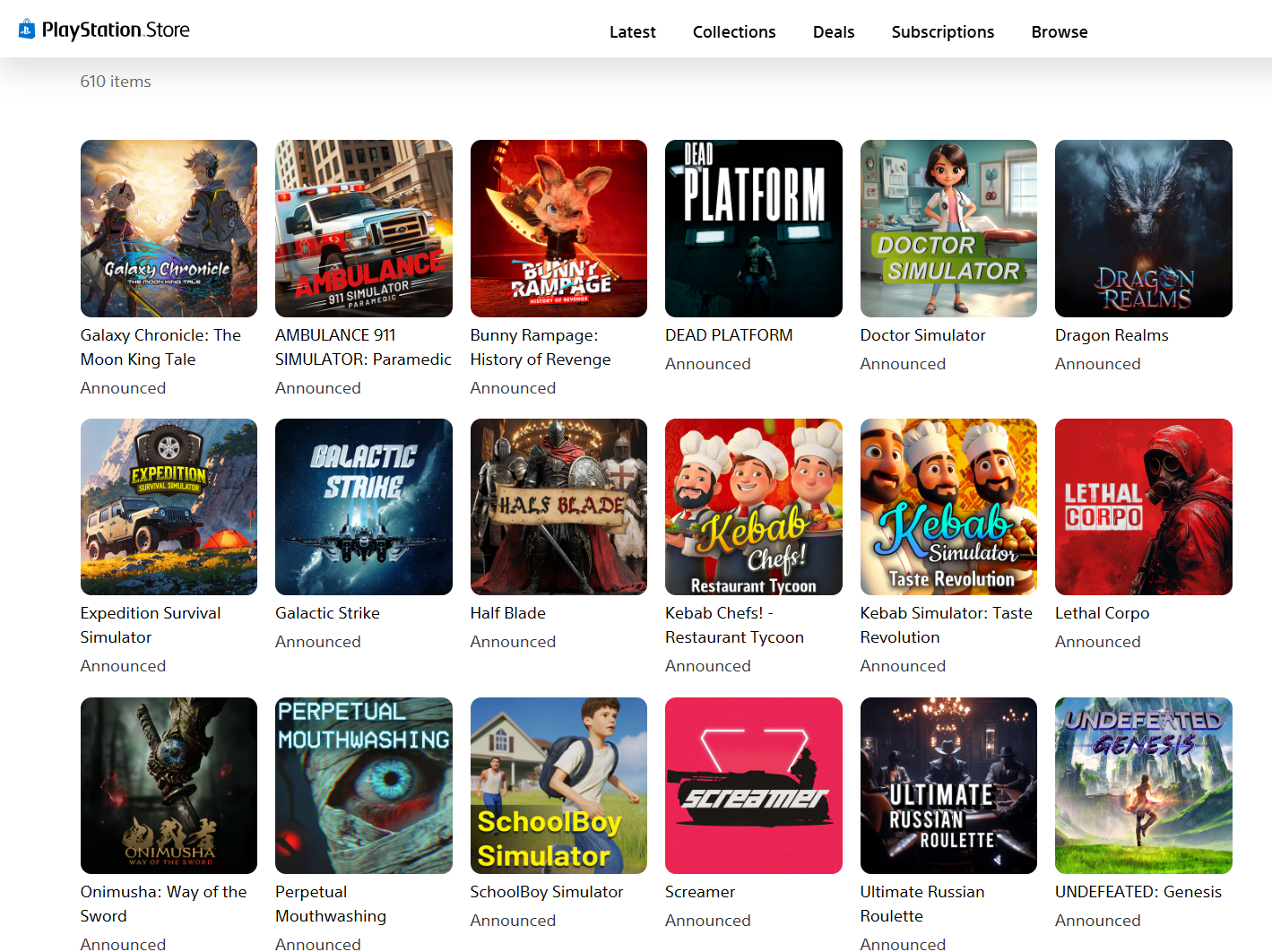
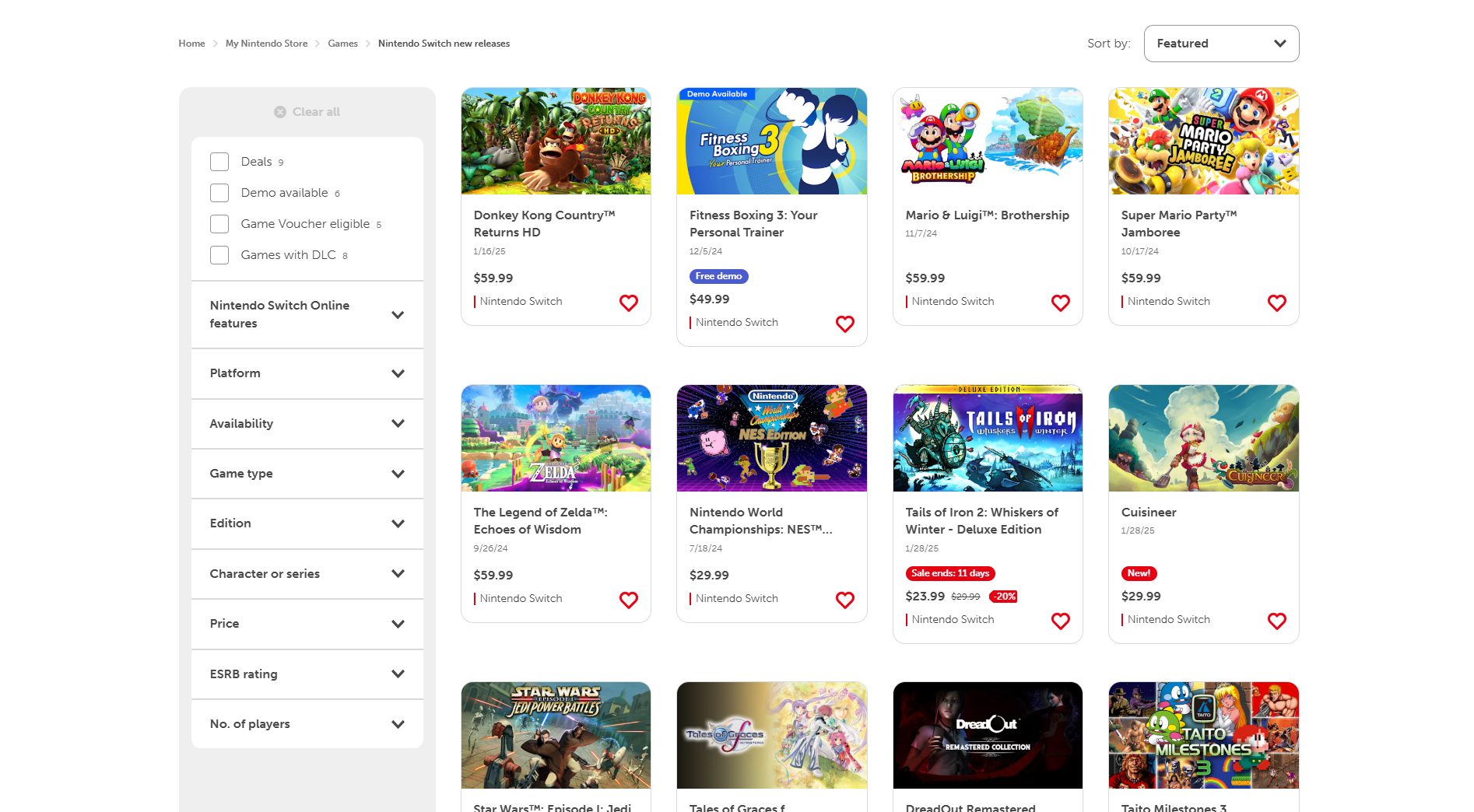
In recent months, an unusual phenomenon has been unfolding on the PlayStation Store and Nintendo eShop, where users have coined the term "slop" to describe the influx of low-quality, deceptive games. Both Kotaku and Aftermath have reported on this issue, particularly highlighting how the eShop has been overrun by games that utilize generative AI and misleading store pages to trick users into buying cheap, substandard products. This trend has now spread to the PlayStation Store, especially noticeable in the “Games to wishlist” section, which is filled with unusual entries.
These "slop" games aren't just poor quality; they are a deluge of similar-looking titles that overwhelm the storefronts. They typically fall into the simulation genre, are perpetually on sale, and often mimic themes and even names of popular games. Their store pages often feature hyper-stylized art and screenshots suggestive of generative AI, but the actual gameplay rarely matches these promises. These games are frequently riddled with technical issues, poor controls, and lack engaging content.
It's been noted by various users that a small number of companies are behind this flood, churning out these games at a rapid pace. YouTube creator Dead Domain conducted a deep dive into the issue and found these companies to be elusive, with minimal public information and some even changing names to further obscure their operations.
The growing frustration among users has led to calls for better regulation on these platforms to curb the spread of "AI slop." This urgency is heightened by ongoing complaints about the Nintendo eShop's deteriorating performance, which seems to slow down with each new wave of games.
To understand how these games manage to proliferate, I spoke with eight anonymous individuals from the game development and publishing industry. Their insights into the game submission process across Steam, Xbox, PlayStation, and Nintendo Switch shed light on why some platforms are more affected than others.
The process of getting a game onto a major storefront involves several steps. Initially, developers or publishers must pitch to Nintendo, Sony, Microsoft, or Valve to gain access to development backend portals and devkits for consoles. They then fill out forms detailing the game's features, such as multiplayer capabilities, internet requirements, and controller support. This leads to the certification (cert) process, where the platform holder ensures the game meets specific technical requirements, like handling corrupted saves or controller disconnections. While Steam and Xbox publicly list these requirements, Nintendo and Sony do not.
Certification also checks for legal compliance and adherence to ESRB ratings, with a strict emphasis on age ratings. A common misconception among gamers is that certification equates to a quality assurance (QA) check, but it's primarily about ensuring the game's code complies with hardware specifications, as emphasized by one publisher.
If a game passes certification, it's ready for release; if not, it's returned for fixes and resubmission. Several developers mentioned receiving vague error codes rather than detailed feedback, particularly from Nintendo.
Store page requirements mandate that screenshots accurately represent the game, but there's no stringent process to verify this. Reviews mainly check for competing imagery and correct language, with one developer recounting an instance where Nintendo caught a discrepancy in screenshots. Nintendo and Xbox review all changes to store pages before they go live, while PlayStation performs a single check near launch, and Valve reviews the initial page but not subsequent changes.
The platform holders generally trust developers to provide accurate information, often allowing them to seek forgiveness rather than permission. Misleading screenshots might result in a request to remove the content, with more severe cases potentially leading to delisting or developer removal. None of the console storefronts have rules against using generative AI in games or store assets, although Steam requires disclosure of its use.
The prevalence of "slop" on Sony and Nintendo's platforms can be attributed to their developer-centric vetting process, which allows approved developers to release multiple games once certified. In contrast, Xbox reviews games individually, making it less susceptible to this issue. Developers and publishers praised Xbox's hands-on approach and high standards, which help maintain quality.
On Nintendo and PlayStation, the focus on technical compliance rather than game quality allows a few companies to flood the market with low-effort games using AI-generated assets. Some developers exploit this by continuously releasing new bundles to stay at the top of sales and new release lists, overshadowing genuine efforts.
While generative AI is often blamed, the core issue seems to be more about the ease of flooding the market with substandard games rather than AI itself. Xbox, despite its investment in AI technology, is less affected due to its curated store pages, while PlayStation's "Games to Wishlist" section is overwhelmed by unreleased games sorted alphabetically.
Steam, despite having a high volume of potential "slop," is less criticized due to its robust discovery options and constant refresh of new releases, which dilutes the impact of low-quality games. Nintendo, on the other hand, presents all new releases in an unsorted manner, exacerbating the problem.
Users have been urging Nintendo and Sony to improve storefront regulation, but neither company responded to requests for comment on future plans. Developers and publishers expressed skepticism about significant changes, particularly from Nintendo, though some noted that the web browser version of the eShop is less problematic.
Sony has previously addressed similar issues, such as in 2021 when it cracked down on repetitive "trophy hunter" games. There's hope that Sony might take action again, but there's also concern about overregulation. An example is Nintendo Life's "Better eShop" initiative, which faced backlash for incorrectly categorizing games.
Developers worry that stricter regulations might inadvertently target quality games, and one publisher highlighted the challenges platform holders face in distinguishing between different types of games. Ultimately, the goal is to balance allowing innovative games to flourish while curbing cynical cash grabs.
Girls Frontline 2: Exilium Global Website Goes Live, Along With Its Socials!
Marvel Rivals: Understanding Bussing and Catching It
New Game Plus in Assassin's Creed Shadows: Confirmed?
Top Skills to Prioritize for Yasuke in Assassin’s Creed Shadows
Assassin’s Creed Shadows Movements Reviewed by Two Parkour Athletes
Death Stranding 2 Release Date Unveiled in Massive Trailer
Pokemon GO Leak Teases New Adventure Effects
Amazon Music Unlimited: Free 3-Month Trial Available
GOG unveils one-click mods, Skyblivion arrives this year
Mar 30,2026
The Darkside Detective Is This Week’s Free Mobile Game on the Epic Games Store
Mar 29,2026

Randy Pitchford Defends Borderlands 4 Comment in Statement
Mar 28,2026
Pokémon Players Now Think Another Card 'Looks Very Similar' to Fan Art, but Others Aren't Convinced This Is a Ho-Oh Plagiarism Situation
Mar 26,2026

Clown Alley Creator Launches, Craft Your Character
Mar 26,2026
 Category